
Sociology BA (UCAS L300)
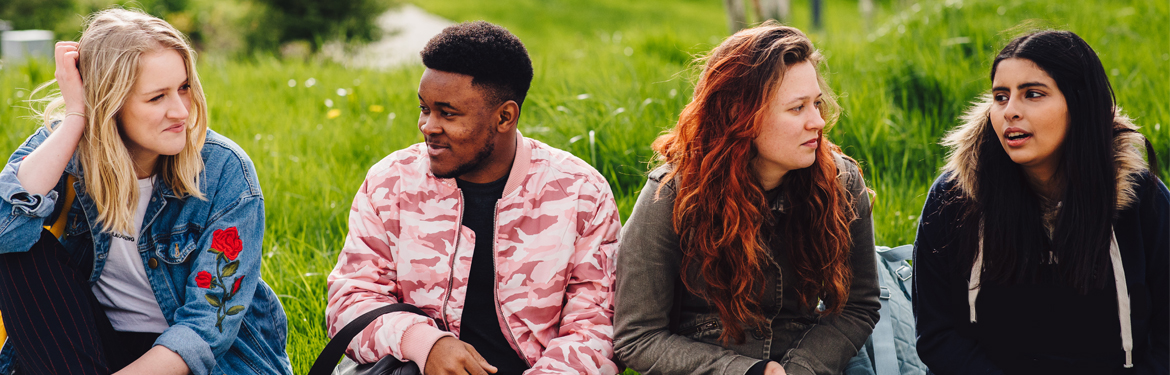
Learn more about our Sociology degree at Warwick
Why is there inequality in wealthy societies? Does surveillance benefit society? If these questions fascinate you, our Sociology degree is a great fit. Learn how to think critically about contemporary society in the UK and beyond. Study at Warwick and enrich your understanding of concepts such as such as gender, race, class and the state.
General entry requirements
A level typical offer
ABB.
A level additional information
You will also need grade 6/B in GCSE English Language. Applicants with grade 6/B in GCSE English Literature and minimum grade 4/C in GCSE English Language may also be considered.
A level contextual offer
We welcome applications from candidates who meet the contextual eligibility criteria and whose predicted grades are close to, or slightly below, the contextual offer level. The typical contextual offer is BBB. See if you’re eligible.
General GCSE requirements
Unless specified differently above, you will also need a minimum of GCSE grade 4 or C (or an equivalent qualification) in English Language and either Mathematics or a Science subject. Find out more about our entry requirements and the qualifications we accept.
We advise that you also check the English Language requirements for your course which may specify a higher GCSE English requirement. Please find the information about this below.
IB typical offer
32.
IB additional information
You will also need grade 6/B in GCSE English Language or International Baccalaureate grade 5 in English A (Higher or Standard Level), grade 5 in Higher Level English B or grade 6 in Standard Level English B.
Applicants with grade 6/B in GCSE English Literature and minimum grade 4/C in GCSE English Language may also be considered.
IB contextual offer
We welcome applications from candidates who meet the contextual eligibility criteria and whose predicted grades are close to, or slightly below, the contextual offer level. The typical contextual offer is 30. See if you’re eligible.
General GCSE requirements
Unless specified differently above, you will also need a minimum of GCSE grade 4 or C (or an equivalent qualification) in English Language and either Mathematics or a Science subject. Find out more about our entry requirements and the qualifications we accept.
We advise that you also check the English Language requirements for your course which may specify a higher GCSE English requirement. Please find the information about this below.
We welcome applications from students taking BTEC qualifications, either alone or in combination with A levels. Our typical BTEC offers are as follows:
- BTEC Level 3 Extended Certificate plus 2 A-Levels: D plus AB, or D* plus BB
- BTEC Level 3 National Diploma plus 1 A-Level: DD plus A, or D*D plus B
- BTEC Level 3 National Extended Diploma: D*DD. You will also need grade 6/B in GCSE English Language
Applicants with grade 6/B in GCSE English Literature and minimum grade 4/C in GCSE English Language may also be considered.
General GCSE requirements
Unless specified differently above, you will also need a minimum of GCSE grade 4 or C (or an equivalent qualification) in English Language and either Mathematics or a Science subject. Find out more about our entry requirements and the qualifications we accept.
We advise that you also check the English Language requirements for your course which may specify a higher GCSE English requirement. Please find the information about this below.
International qualifications
English Language requirements
All applicants have to meet our English Language requirements. If you cannot demonstrate that you meet these, you may be invited to take part in our Pre-sessional English course at WarwickLink opens in a new window.
This course requires: Band C
Learn more about our English Language requirementsLink opens in a new window
Frequently asked questions
Warwick may make differential offers to students in a number of circumstances. These include students participating in a Widening Participation programme or who meet the contextual data criteria.
Differential offers will usually be one or two grades below Warwick’s standard offer.
All students who successfully complete the Warwick IFP and apply to Warwick through UCAS will receive a guaranteed conditional offer for a related undergraduate programme (selected courses only).
Find out more about standard offers and conditions for the IFP.
We welcome applications for deferred entry.
We do not typically interview applicants. Offers are made based on your UCAS form which includes predicted and actual grades, your personal statement and school reference.
Course overview
The BA Sociology degree will provide you with a strong base to understand how society and people have changed over time.
With the study of social life at its heart, the scope of sociology is almost limitless. This course will introduce you to its broad subject matter, which encompasses family life, education, crime, work, war, religion, capitalism, power, love, the self, the media, to name just a few. You will also gain skills in quantitative and qualitative research methods that can be applied across a range of different subject areas.
Sociology also has an abiding concern with the main markers of social difference in modern society – class, gender, race or ethnicity, age, sexuality and (dis)ability. You will explore how these often intersect in shaping the life chances and experiences of individuals. In addition to lectures, interactive seminars will add depth to your learning.
Study abroad
You have the option of studying abroad which will add one year to your degree, as you will spend your third year abroad.
Immerse yourself in life in another country and grow as a global citizen. Explore other cultures, languages, and understand global connections and inequalities.
Countries Sociology students have visited. Please note countries and institutions are subject to change.
Europe
- École Normale Supérieure de Cachan, France
- Charles University Prague, Czech Republic
- Friedrich-Schiller-Universitat Jena, Germany
- Goteborg University, Sweden
- Universidad Complutense de Madrid, Spain U
- Universitat Autōnoma de Barcelona, Spain
- Universitat Bremen, Germany
- University of Copenhagen, Denmark
- University of Iceland
Worldwide
- Monash University, Australia and/or Malaysia
- Pontifical Catholic University of Rio de Janeiro, Brazil
- Western University, Canada
- University of Hong Kong, Hong Kong
- Chinese University of Hong Kong, Hong Kong
- Sun Yat-sen University, China
- Tsinghua University, China
- Xiamen University, China
- Hokkaido University, Japan
- Universitas Gadjah Mada, Indonesia
Core modules
Choose from a range of modules to create a general degree or a degree with a specialism.
You also have the option to add a year of study abroad at a partner University. In your final year, you will be ready to conduct your own independent research on a topic of your choice.
This degree covers topics such as:
- Media
- Gender
- Race
- Identity
- Capitalism
- Research methods
- How society has changed over time
- The relationship between individuals and society
- How techniques, perspectives, and traditions develop
- Ideologies, technologies, and issues that affect society
- Comparing interactions between countries and global societies
The final year includes a choice of optional specialisms:
- BA Sociology with Specialism in Social and Political Thought
- BA Sociology with Specialism in Research Methods
- BA Sociology with Specialism in Gender Studies
- BA Sociology with Specialism in Race and Global Politics
- BA Sociology with Specialism in Social Inequalities and Public Policy
- BA Sociology with Specialism in Technologies and Markets
If you choose to specialise, you will receive a degree certificate with the relevant specialism.
Year One
Sociology of Gender
Through case studies from the gender pay gap to the politics of Christmas, this module will transform how you see gender and its impact on the world. You will explore the origins of gender ideas and analyse their effects on areas of social life including: language; media and popular culture; science; work; family relationships; sexuality; violence; education; politics; and feminist movements.
While gender is the focus of this module, you will also consider how gender connects to other dimensions of social difference and inequality, such as sexuality, race, class or disability.
Read more about the Sociology of Gender moduleLink opens in a new window, including the methods of teaching and assessment (content applies to 2022/23 year of study).
Researching Society and Culture
What is society and how do you study it? Is human behaviour governed by rules similar to the natural world that you can study objectively? Or do human beings consciously act upon their environment and change the world through creativity and intelligence, driven by their own understanding and motivations? These are some of the questions that this module will explore.
You will be introduced to the core ideas behind sociological research and the practical tools to undertake research yourself. As well as looking at some of the key qualitative methods (for example, interviews, ethnography and discourse analysis), you will also examine the political, ethical and practical issues that social research inevitably entails.
Read more about the Researching Society and Culture moduleLink opens in a new window, including the methods of teaching and assessment (content applies to 2022/23 year of study).
Sociology of Race
What is 'race' and why does it matter? This module answers these questions by drawing on the wealth of expertise within Warwick Sociology, and is taught by experts who research and write about race and racism from a range of perspectives. Students will learn about both theoretical concepts and real-world examples that will help them to understand how race and racism shape the social world.
Read more about the Sociology of Race moduleLink opens in a new window, including the methods of teaching and assessment (content applies to 2022/23 year of study).
Class and Capitalism in the Neoliberal World
Protest and anger characterise the contemporary era – young people taking part in militant politics, protest parties gaining more votes, and even NHS doctors taking to the streets.
In this module, we will explore the social consequences of the economic and political transformations associated with neoliberalism that have taken place in recent decades. We will ask why these changes might be responsible for the global rise in urban unrest and dissatisfaction.
Topics will include growing inequality and elite power, militant policing, consumerism, anxiety, debt, the destruction of industrial communities, class identity, the marketisation of education, and the diminishing spaces of public life.
Read more about the Class and Capitalism in the Neoliberal World moduleLink opens in a new window, including the methods of teaching and assessment (content applies to 2022/23 year of study).
History of Sociological Thought
What holds societies together? How do societies change? And how is politics in the conventional sense affected by factors such as class, status, ethnicity or religion, or the state of the economy? These are some of the questions with which you will engage with when you consider the history of sociological thought. You will gain skills of research, analysis and debate by considering the extent to which sociology may be considered a science and how the evolution of sociological thought has been shaped by events and the cultural, economic and political problems of the day.
Read more about the History of Sociological Thought moduleLink opens in a new window, including the methods of teaching and assessment (content applies to 2022/23 year of study).
Introduction to Social Analytics in Social Inequalities Research
In the age of ever-increasing data availability which is paired with a growing sophistication of statistical techniques, the opportunities for social science research are vast. This module will give you an understanding of the basic elements of core descriptive statistics which will allow you not only to critically engage with quantitative findings in existing social science research, but also conduct quantitative analysis yourself. The module covers the topics of conceptualisation, operationalisation and measurement, as well as the principles of sampling and the basics of research design. You will be introduced to the process of social science research and quantitative methods in one hour lectures, and then explore these in extended seminars (2h) both through readings, and the statistical software SPSS. We will be working on real data sets, such as the European Social Survey.
Read more about the Introduction to Social Analytics in Social Inequalities Research moduleLink opens in a new window, including the methods of teaching and assessment (content applies to 2021/22 year of study).
Year Two
Designing and Conducting Social Research
This module will teach you the core concepts and practical skills to undertake qualitative social research in academic and professional settings. These include research design, ethnography, in-depth interviewing, documents and discourse. As well as practical skills, you will investigate how social research has changed in recent decades, considering:
- ethical questions when researching life online
- how (and whether) you should study Twitter
- effects of social media on social interactions
- how to engage diverse audiences
You will also gain analytical skills to critically evaluate previous research and develop your ability to collect and analyse data using a range of qualitative methods.
Read more about the Designing and Conducting Social Research moduleLink opens in a new window, including the methods of teaching and assessment (content applies to 2022/23 year of study).
Practice and Interpretation of Quantitative Research
Quantitative methods can help you answer questions such as:
- Is income inequality in the UK growing?
- Does marriage improve health?
- Does growing up in a poor neighbourhood affect your life chances?
Analysing representative, large-scale social surveys is crucial for sociologists to understand social processes. This module will introduce you to quantitative methods and how to analyse large data sets using SPSS Statistics software. It will help you engage with published quantitative sociological research and to undertake your own basic quantitative data analysis.
Read more about the Practice and Interpretation of Quantitative Research moduleLink opens in a new window, including the methods of teaching and assessment (content applies to 2022/23 year of study).
Modern Social Theory
This module will introduce you to the main thinkers and movements in critical social theory. Topics include Marxism, post-structuralism, class and culture. The changing conceptualisation of power and class is a focus throughout the module. This helps you to see how the different theoretical approaches relate to each other, and to historical and political events.
Read more about the Modern Social Theory moduleLink opens in a new window, including the methods of teaching and assessment (content applies to 2022/23 year of study).
Year Three
Dissertation
Read more about this moduleLink opens in a new window, including the methods of teaching and assessment (content applies to 2021/22 year of study).
Optional modules
Optional modules can vary from year to year. Example optional modules may include:
Year One
- Life of Media: Past, Present and Future
- Sociology of Education
- Crime and Society
- Criminology: Theories and Concepts
- International Perspectives on Gender
Year Two
- Commercial Cultures in Global Capitalism
- Educational Inequalities
- Relationship and Family Change: Demographic and Sociological Perspectives
- Becoming Yourself: The Construction of the Self in Contemporary Western Societies
- Media, Audiences and Social Change
- Political Sociology
- Gender and Violence
- Surveillance and Society: Race, Gender, Class
- Multivariate Secondary Analysis of Social Data
- Advanced Theory in Criminology and Social Justice
- Beyond the Binary: Trans-forming Gender
- War, Memory and Society
- Social Theory of Law
- Policing and Society
- Gender, Race and Sexualities in the Criminal Justice System: Policy and Practice
Year Three
- Social Movements and Political Action
- Racism and Xenophobia
- Ethnography and the Anthropological Tradition
- Transnational Media Ecologies
- Race, Resistance and Modernity
- Sociology of Knowledge, Science and Intellectuals
- Punishment, Justice and Control
- Feminist Pedagogy/Feminist Activism
- Postcolonial Theory and Politics
- Queering Sociology
- State Crime, Human Rights and Global Wrongs
- Applying Quantitative Methods to Social Research
- Experiments in the Social Sciences and Humanities
- Sociology of End Times
- Global South and Indigenous Feminisms
- Social Data Science
- Sociology of Green Transformations
Explore our modules in more detail.
Optional specialisms
In your third year, you can pursue a 'Sociology with Specialism' degree. This allows you to follow a particular interest or career path that interests you.
BA Sociology with Specialism in Technologies and MarketsLink opens in a new window
- Dissertation - specific to specialism
- Life of Media: Past, Present and Future
- Media, Audiences and Social Change
- Commercial Cultures in Global Capitalism
- Capitalism and Religion
- Economic Sociology
- Sociology of Knowledge
- Science and Intellectuals
- Beastly Sociology
- Transnational Media Ecologies
- How Sociology Can Save the Environment
BA Sociology with Specialism in Race and Global PoliticsLink opens in a new window
- Dissertation - specific to specialism
- War, Memory and Society
- Surveillance and Security: Race, Gender, Class
- Racism and Xenophobia
- Capitalism and Religion
- Race, Resistance and Modernity
- Transnational Media Ecologies
- Feminist Pedagogy/Feminist Activism
- Postcolonial Theory and Politics
- State Crime, Human Rights and Global Wrongs
BA Sociology with Specialism in Social Inequalities and Public PolicyLink opens in a new window
- Dissertation - specific to specialism
- Sociology of Education
- Educational Inequalities
- Relationship and Family Change: Demographic and Sociological Perspectives
- Disability, Inequality and the Life Course
- Social Movements and Political Action
- Economic Sociology
- Multivariate Secondary Analysis of Data
- Punishment, Justice and Control
- The Sociology of Urban Life
BA Sociology with Specialism in Social and Political ThoughtLink opens in a new window
- Dissertation - specific to specialism
- Life of Media: Past, Present and Future
- Political Sociology
- Becoming Yourself: The Construction of the Self in Contemporary Western Societies
- Racism and Xenophobia
- Capitalism and Religion
- Economic Sociology
- Race, Resistance and Modernity
- Sociology of Knowledge, Science and Intellectuals
- Transnational Media Ecologies
- Postcolonial Theory and Politics
- Queering Sociology
- Sociology of End Times
BA Sociology with Specialism in GenderLink opens in a new window
- Dissertation - specific to specialism
- Becoming Yourself: The Construction of the Self in Contemporary Western Societies
- Gender, Race and Sexualities in the Criminal Justice System: Policy and Practice
- Beyond the Binary: Trans-forming Gender
- Gender and Violence
- Transnational Media Ecologies
- Feminist Pedagogy/Feminist Activism
- Queering Sociology
BA Sociology with Specialism in Research MethodsLink opens in a new window
- Dissertation - specific to specialism
- Media, Audiences and Social Change
- Relationship and Family Change: Demographic and Sociological Perspectives
- Ethnography and the Anthropological Tradition
- Multivariate Secondary Analysis of Social Data
- Applying Quantitative Methods to Social Research
- Experiments in the Social Sciences and Humanities
- Social Data Science
Assessment
You will be assessed through a combination of essays, reports, podcasts, reflective writing, and unseen exams.
In the final year, there is a 10,000-word dissertation on a sociological topic of your choice.
Teaching
Lectures and Seminars
Most modules are taught using a combination of weekly lectures and seminars. Lectures give an introduction to a topic to help prepare you for discussions in seminars. In seminars, you can engage in debates and share your views.
Learning support
You will have a personal tutor who you can speak to about any questions you may have. There are also regular feedback sessions and opportunities to speak to module directors and seminar tutors.
Class sizes
Seminars have 15 to 17 students each. Lecture sizes vary.
Typical contact hours
There are 10 to 11 hours of formal contact time available per week in Year One, to help you settle into University life. After then, 8 hours of contact time is available per week.
Tuition fees
Scholarships and bursaries
Your career
Where a Sociology or Sociology and Criminology degree can take you:
- Professional roles in various national and international NGOs, civil society and charity organisations
- Civil service careers
- Researchers and research analysts for state and independent bodies
- Media and communication industry
- Advertising and Marketing
- Accounting and Finance careers
- Academic careers and doctoral scholarships for further study
- Teaching Careers
- Social Work
- Careers and Employability Assistants
- Customer Representatives and HR Graduates
- Directorate Administrators
- Event Administrators
- Resident Tutors
- Management Trainees
- Marketing and Development Coordinators
- Senior Sales Consultants
Helping you find the right career
Our department has a dedicated professionally qualified Senior Careers Consultant to support you. They offer impartial advice and guidance, together with workshops and events throughout the year. Previous examples of workshops and events include:
- Working for More than Profit
- Warwick careers fairs throughout the year
- Your Sociological future: Sociology Alumni Evening
- My Sociological Future- What next? Career planning for undecided Sociology finalists
- Effective CVs and Applications
Sociology at Warwick
We have an international reputation for research excellence, a global and cosmopolitan perspective, and high-quality teaching. Our curriculum offers a comprehensive and up-to-date foundation with a diverse range of specialist options:
What does it mean to understand the world in which you live? What will your contribution be to this changing world? How do your own experiences and life chances compare to those of others?
Sociology – the study of humans in society – attempts to capture the rich variety and complexity of human social life. Indeed, it is difficult to think of any area of social existence that a sociologist wouldn’t be interested in examining, from the most intimate of personal relationships to the worldwide circulation of ideas, beliefs, products and people.
Find out more about us on our website
Our courses
Related degrees

Life at Warwick
Within a close-knit community of staff and students from all over the world, discover a campus alive with possibilities. A place where all the elements of your student experience come together in one place. Our supportive, energising, welcoming space creates the ideal environment for forging new connections, having fun and finding inspiration.
Find out how to apply to us, ask your questions, and find out more.

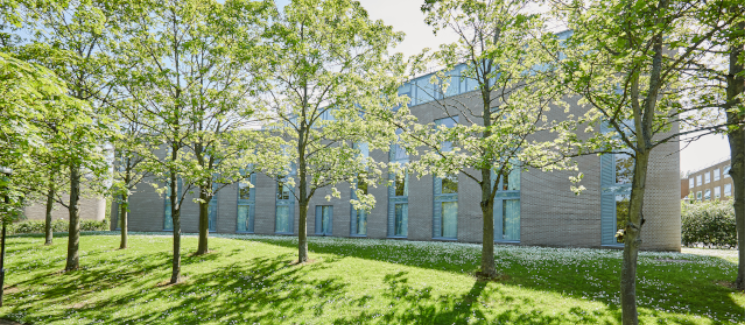
Warwick Accommodation
Finding the right accommodation is key to helping you settle in quickly.
We have 12 self-catering undergraduate halls of residence on campus.
Our student property management and lettings agency manages more than 8,000 rooms both on and off campus, and provides advice to all full-time undergraduates.

Our campus
You won't be short of ways to spend your time on campus - whether it's visiting Warwick Arts Centre, using our incredible new sports facilities, socialising in our bars, nightclub and cafés, or enjoying an open-air event. Or if you need some peace and quiet, you can explore lakes, woodland and green spaces just a few minutes’ walk from central campus.

Food and drink
We have lots of cafés, restaurants and shops on campus. You can enjoy great quality food and drink, with plenty of choice for all tastes and budgets. There is a convenience store on central campus, as well as two supermarkets and a small shopping centre in the nearby Cannon Park Retail Park. Several of them offer delivery services to help you stay stocked up.
And don't miss our regular food market day on the Piazza with tempting, fresh and delicious street food. Soak up the atmosphere and try something new, with mouth-watering food for all tastes.

Clubs and societies
We currently have more than 300 student-run societies.
So whether you’re into films, martial arts, astronomy, gaming or musical theatre, you can instantly connect with people with similar interests.
Or you could try something new, or even form your own society.
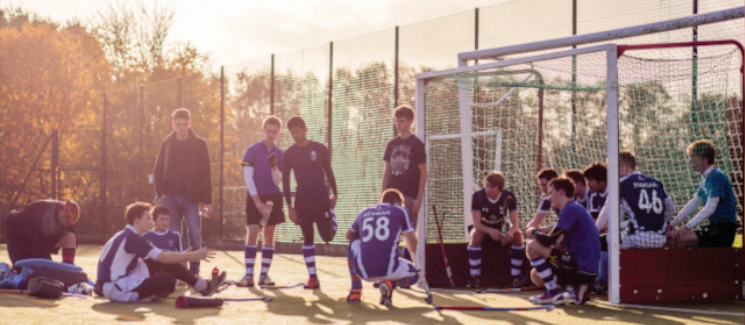
Sports and fitness
Staying active at Warwick is no sweat, thanks to our amazing new Sports and Wellness Hub, indoor and outdoor tennis centre, 60 acres of sports pitches, and more than 60 sports clubs.
Whether you want to compete, relax or just have fun, you can achieve your fitness goals.


Studying on campus
Our campus is designed to cater for all of your learning needs.
You will benefit from a variety of flexible, well-equipped study spaces and teaching facilities across the University.
- The Oculus, our outstanding learning hub, houses state-of-the-art lecture theatres and innovative social learning and network areas.
- The University Library provides access to over one million printed works and tens of thousands of electronic journals
- Three Learning Grids offering you flexible individual and group study spaces.
Travel and local area
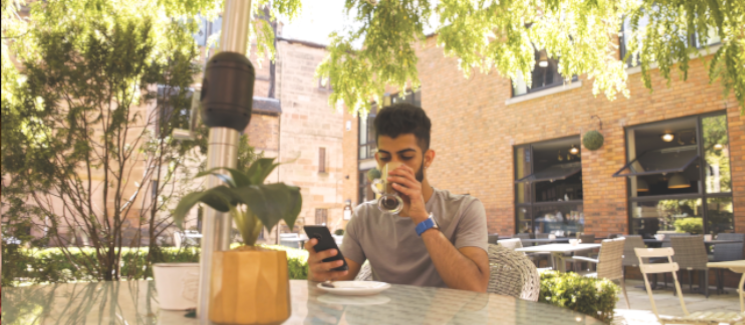
Our campus is in Coventry, a modern city with high street shops, restaurants, nightclubs and bars sitting alongside medieval monuments. The Warwickshire towns of Leamington Spa and Kenilworth are also nearby.
The University is close to major road, rail and air links. London is just an hour by direct train from Coventry, with Birmingham a 20-minute trip. Birmingham International Airport is nearby (a 20-minute drive).
Wellbeing support and faith provision
Our continuous support network is here to help you adjust to student life and to ensure you can easily access advice on many different issues. These may include managing your finances and workload, and settling into shared accommodation. We also have specialist disability and mental health support teams.
Our Chaplaincy is home to Chaplains from the Christian, Jewish and Muslim faiths. We provide regular services for all Christian denominations and a Shabbat meal every Friday for our Jewish students. There is also an Islamic prayer hall, halal kitchen and ablution facilities.
How to apply
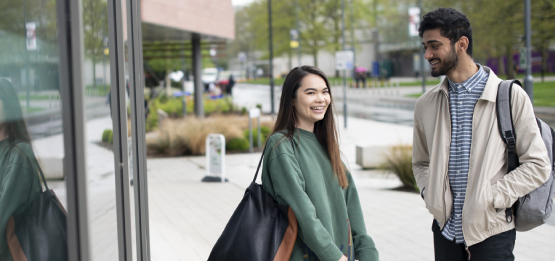
Learn more about our application process.

Key dates
Key dates for your application to Warwick.

Writing your personal statement
Make an impression and demonstrate your passion for your course.

After you've applied
Find out how we process your application.
Our Admission Statement
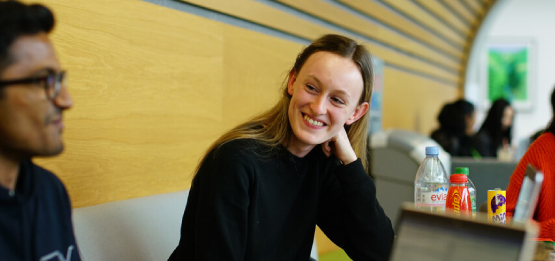
Read Warwick's Admission Statement
3 ways to connect
Talk to us
Join us at a live event. You can ask about courses, applying to Warwick, life at Warwick, visas and immigration, and more.
Warwick Experience
Take a virtual, student-led campus tour. Then join an interactive panel session, where you can hear from and chat to our current students and staff.
Student blogs
Explore our student blogs in OurWarwick. You can read about campus life from students themselves, and register to post questions directly to students.
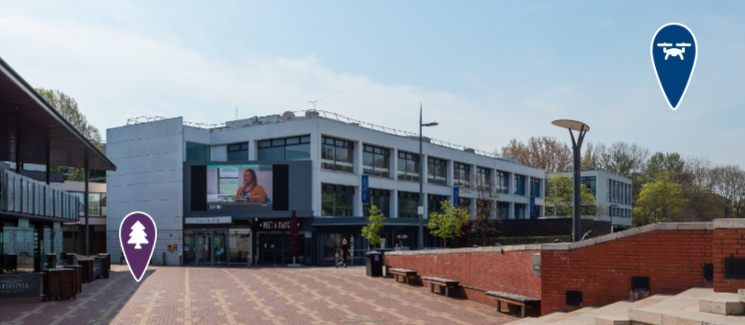
Explore campus with our virtual tour
Our 360 tour lets you:
- Watch student videos
- View 360 photography and drone footage
- Learn about facilities and landmarks
Explore our campus virtually through our 360 campus tour now
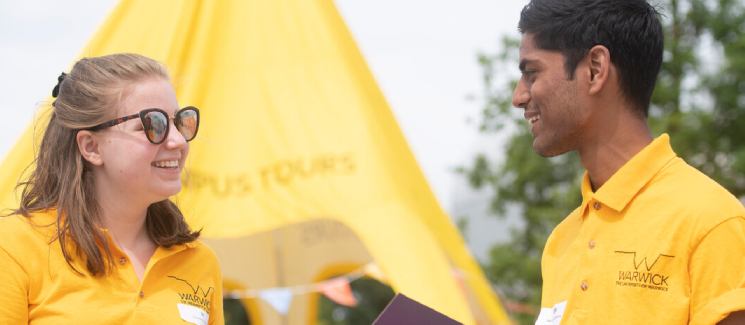
Come to an Open Day
Don’t just take it from us, come and see for yourself what Warwick is all about. Whether it's a virtual visit or in-person, our University Open Days give you the chance to meet staff and students, visit academic departments, tour the campus and get a real feel for life at Warwick.
Sign up for updates
Discover more about our courses and campus life with our helpful information and timely reminders.