
Human-Centred Computing News
Six papers accepted to the 47th ICALP
 We are pleased to report that members of the department's Theory and Foundations research theme have had 6 papers accepted to the 47th International Colloquium on Automata, Languages and Programming, the main European conference in Theoretical Computer Science and annual meeting of the European Association for Theoretical Computer Science. The papers are:
- On the central levels problem by Petr Gregor, Ondřej Mička and Torsten Mütze
- Matrices of optimal tree-depth and row-invariant parameterized algorithm for integer programming by Timothy Chan, Jacob Cooper, Martin Koutecký, Dan Král and Kristýna Pekárková
- The Complexity of Verifying Loop-free Programs as Differentially Private by Marco Gaboardi, Kobbi Nissim and David Purser
- Rational subsets of Baumslag-Solitar groups by Michaël Cadilhac, Dmitry Chistikov and Georg Zetzsche
- The Strahler number of a parity game by Laure Daviaud, Marcin Jurdzinski and K. S. Thejaswini
- On the power of ordering in linear arithmetic theories by Dmitry Chistikov and Christoph Haase
Latest two academic promotions
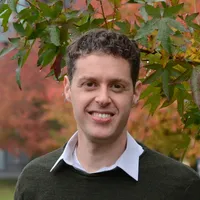
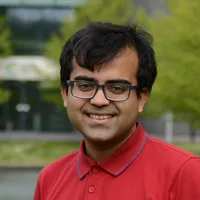 Another piece of excellent news: Dr Sayan Bhattacharya and Dr Tom Gur have been promoted to Associate Professor, effective from 1 May 2020. Quoting from their recommendations,
Dr Bhattacharya has attracted a very competitive EPSRC New Investigator grant and a high-profile UK-Israel collaborative grant with the Weizmann Institute... . Dr Bhattacharya’s high standing in the research community is confirmed by his memberships of the programme committees of prestigious conferences, as well as his organisation of international research events. … Dr Bhattacharya has developed a new 3rd-year core module for Discrete Mathematics students and delivered it for the past three years, as well as now teaching most of a key 1st-year core module for the same degree course.
and
Dr Gur has attracted a highly prestigious UKRI Future Leaders Fellowship, as well as growing his international leading publications record. He is also growing a successful own research group, having recruited a PhD student and on track to employing several postdocs. … voluntarily exceeding his workload, Dr Gur has developed from scratch and currently teaches a popular 4th-year module on quantum computing. Mentioning here only some of his other contributions, Dr Gur also … is the organiser of the main departmental research seminar, was an active contributor to the department’s recent Athena SWAN submission, and has been developing fruitful links with several industrial partners.
it remains to say many congratulations!
CRUK award to Dr Fayyaz Minhas for early detection of cancer

Dr Fayyaz Minhas of the Tissue Image Analytics (TIA) lab at the Computer Science department is a co-PI on a £97K grant by Cancer Research UK’s Early Detection Committee to explore machine learning for discovery of pre-neoplastic signature in mesothelioma. He will be working closely with the PI Dr Jan Lukas Robertus, who is a Senior Consultant Cardiothoracic Pathologist at the Royal Brompton Hospital. Dr Minhas will lead on the machine learning and computational pathology side of the project.