
Latest Publications
Transcription factor deformed wings is an Atg8a-Interacting protein that regulates autophagy
 Kołodziej, Marta, Tsapras, Panagiotis, Cameron, Alexander and Nezis, Ioannis P
LC3 (microtubule-associated protein 1 light chain 3, called Atg8 in yeast and Drosophila) is one of the most well-studied autophagy-related proteins. LC3 controls the selectivity of autophagic degradation by interacting with LIR (LC3-interacting region) motifs also known as AIM (Atg8-interacting motifs) on selective autophagy receptors that carry cargo for degradation. Although the function of Atg8 family proteins is primarily cytoplasmic, they are also enriched in the nucleus. Here, we used yeast two-hybrid screening, and we identified transcription factor Deformed wings (Dwg) as an Atg8a-interacting protein in Drosophila. Dwg-Atg8a interaction is LIR motif-dependent. We have created Dwg Y129A/I132A LIR mutant flies and shown that they exhibit elevated autophagy, improved resistance to oxidative stress, and starvation. Our results provide novel insights into the transcriptional regulation of autophagy in Drosophila.
Understanding the ecological versatility of Tetracladium species in temperate forest soils
 Anna Lazar, Richard P Phillips, Stephanie Kivlin, Gary D Bending, Ryan M Mushinski
Although Tetracladium species have traditionally been studied as aquatic saprotrophs, the growing number of metagenomic and metabarcoding reports detecting them in soil environments raises important questions about their ecological adaptability and versatility. We investigated the factors associated with the relative abundance, diversity and ecological dynamics of Tetracladium in temperate forest soils. Collectively, our findings highlight the ecological significance of Tetracladium in temperate forest soils and emphasize the importance of site-specific factors and microbial interactions in shaping their distribution patterns and ecological dynamics.
Gladiolin produced by pathogenic Burkholderia synergizes with amphotericin B through membrane lipid rearrangements
 Claudia Simm, Tzong-Hsien Lee, Harshini Weerasinghe, Dean Walsh, Ioanna T Nakou, Madhu Shankar, Wai Chung Tse, Rebecca Inman, Robert J Mulder, Freya Harrison, Marie-Isabel Aguilar, Gregory L Challis, Ana Traven
Amphotericin B (AmpB) is an effective but toxic antifungal drug.. AmpB disrupts fungal membranes by two proposed mechanisms: ergosterol sequestration from the membrane and pore formation. Whether these two mechanisms operate in conjunction and how they could be potentiated remains to be fully understood. Here, we report that gladiolin, a polyketide antibiotic produced by Burkholderia gladioli, is a strong potentiator of AmpB and acts synergistically against Cryptococcus and Candida species, including drug-resistant C. auris. Gladiolin also synergizes with AmpB against drug-resistant fungal biofilms, while exerting no mammalian cytotoxicity.. Collectively, our findings shed light on AmpB’s mechanism of action and characterize gladiolin as an AmpB potentiator, showing an antifungal mechanism distinct from its proposed antibiotic activity. We shed light on the synergistic mechanism at the membrane, and provide insights into potentiation strategies to improve AmpB’s activity/toxicity relationship.
Membrane staining and phospholipid tracking in Pseudomonas aeruginosa PAO1 using the phosphatidylcholine mimic propargyl-choline
 Chris L B Graham, Jack Bryant, David I Roper, Manuel Banzhaf
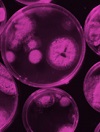
Here we describe a method for in vivo phospholipid labelling by fluorescent imaging in Pseudomonas aeruginosa using a phosphatidylcholine (PC) mimic, “propargyl-choline”(PCho). This click-chemistry liable headgroup mimic is visible by microscopy and allows the covalent labelling of lipids. Fluorescence of the cell membranes, visible in heterogenous patches, is dependent on PCho concentration and is localised in the membrane fraction of cells, demonstrating that it is suitable for membrane labelling and cell imaging.
Isolation and Characterisation of Novel Lytic Bacteriophages for Therapeutic Applications in Biofilm-Associated Prosthetic Joint Infections
 Nathan J. Burton, Luís D R. Melo, Michaël F D. Tadesse, Bethany Pearce, Evangelos Vryonis, Antonia P. Sagona
In this study, we produced a cocktail of novel bacteriophages and assessed their viability to eradicate nosocomial staphylococcal biofilms. Here, we used clinical isolates from prosthetic joint infections to isolate and identify four new bacteriophages from sewage effluent. These novel phages were characterized through electron microscopy and full genome sequencing. Subsequently, we combined them into a phage cocktail, which effectively re-sensitized biofilms to vancomycin and flucloxacillin. Notably, this phage cocktail demonstrated low cytotoxicity in vitro to human epithelial cells, even when used alongside antibiotic treatments. These findings highlight the potential of the phage cocktail as a tool to increase antibiotic treatment success in prosthetic joint infections.
Cutaneous leishmaniasis in British troops following jungle training in Belize: Cumulative incidence and potential risk practices
 Rawlings, Ngwa Niba, Bailey, Mark, Craig, Peter, Courtenay, Orin
British soldiers undergoing jungle training in Belize typically experience a relatively low risk of developing cutaneous leishmaniasis. However, an uncharacteristically large outbreak of cutaneous leishmaniasis occurred in 2022. This study aimed to determine the cumulative incidence of the disease and highlight potential shortcomings in personal protective measures to mitigate exposure to sand fly vector bites. A retrospective analysis was conducted on medical records of cutaneous leishmaniasis cases between 2005 and 2022, as well as on questionnaire responses regarding personal protective measures administered to cutaneous leishmaniasis cases in 2022. The reasons behind the unusually high numbers of cutaneous leishmaniasis cases and cumulative incidence in 2022 remain unclear, emphasising the need to improve personal protective measures provision and implement a comprehensive health education programme for troops undergoing jungle training in Belize.