
IER News & blogs
First EUTOPIA PhD graduate
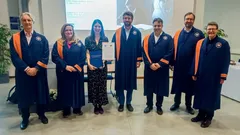 Rebeka Balogh became IER’s first EUTOPIA graduate.
EUTOPIA is a pan European partnership of ten universities focused on collaborative research. It funded a joint PhD studentship between IER and Interface Demography (ID) at the Vrije Universiteit Brussel (VUB).
As Biden faces questions about his age, researchers weigh in on working in your 80s
 US media outlet CNBC interviewed Professor Philip Taylor about issues of ageing and work during intense scrutiny of the prospect of an octogenarian President in the White House. Find out more about what he said on the CNBC website.
LMI for All quarterly newsletter just published
 The newsletter provides an update on latest developments on the LMI for All portal, and includes links to the latest blogs and learning units plus information on new data coming soon and upcoming webinars. Read the LMI for All newsletter here.
European Social Dialogues: Shaping EU Social Policy through Parental Leave Rights
 The European Social Dialogue (ESD) has served as the platform for European social partners to negotiate parental leave policies at the European Union (EU) level since 1995.
The partners’ efforts to revise the regulations in 2015, in response to the European Commission’s broader approach toward European work–life balance policies, failed, however, and the reasons for and implications of this failure remain insufficiently explored.
Spelling It Out, Making It Count
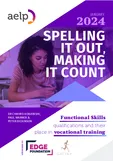 This new report investigates the current state of Functional Skills Qualifications (FSQs) in English and maths in the UK following their reform in 2019.
Conducted by the Association of Employment and Learning Providers (AELP) and The University of Warwick Institute of Employment Research (IER), and supported by the Gatsby Foundation and the Edge Foundation, the study explores whether FSQs are still serving their intended purpose as practical, real world alternatives to GCSEs that focus on developing essential life and work skills.