
Economics, Politics and International Studies BSc or BA (UCAS LLD2)

Explore our Economics, Politics and International Studies degree at Warwick
Our Economics, Politics and International Studies (BSc/BA) crosses subject boundaries, combining economics and political analysis. It enables you to contextualise economic theory and practice within national and global political structures and behaviour. It also gives a rounded perspective of how governments, companies and individuals function in the 21st century, with up-to-date analysis and debate of key events.
General entry requirements
A level typical offer
A*A*A.
A level additional information
You will also need grade A*/8 in GCSE Mathematics and grade 6/B in GCSE English Language.
A level contextual offer
We welcome applications from candidates who meet the contextual eligibility criteria. The typical contextual offer is AAA including A*/8 in GCSE Maths (or B at A Level in Maths). See if you’re eligible.
General GCSE requirements
Unless specified differently above, you will also need a minimum of GCSE grade 4 or C (or an equivalent qualification) in English Language and either Mathematics or a Science subject. Find out more about our entry requirements and the qualifications we accept.
We advise that you also check the English Language requirements for your course which may specify a higher GCSE English requirement. Please find the information about this below.
IB typical offer
39 to include 6, 6, 6 in three Higher Level subjects.
IB additional information
You will also need grade A*/ 8 in GCSE Maths, or 5 in IB Standard Level Mathematics (either ‘Analysis and Approaches’ or ‘Applications and Interpretation’). If you do not meet these Maths requirements you must be taking Maths at Higher Level in the IB. You will also need grade 6/B in GCSE English Language or International Baccalaureate grade 5 in English A (Higher or Standard Level), grade 5 in Higher Level English B or grade 6 in Standard Level English B.
IB contextual offer
We welcome applications from candidates who meet the contextual eligibility criteria. The typical contextual offer is 36 including 5 in Standard Level Maths or 4 in Higher Level Maths (either ‘Analysis and Approaches’ or ‘Applications and Interpretation’). See if you’re eligible.
General GCSE requirements
Unless specified differently above, you will also need a minimum of GCSE grade 4 or C (or an equivalent qualification) in English Language and either Mathematics or a Science subject. Find out more about our entry requirements and the qualifications we accept.
We advise that you also check the English Language requirements for your course which may specify a higher GCSE English requirement. Please find the information about this below.
We welcome applications from students taking BTECs alongside two A levels.
You will also need grade A*/8 in GCSE Mathematics and grade 6/B in GCSE English Language.
General GCSE requirements
Unless specified differently above, you will also need a minimum of GCSE grade 4 or C (or an equivalent qualification) in English Language and either Mathematics or a Science subject. Find out more about our entry requirements and the qualifications we accept.
We advise that you also check the English Language requirements for your course which may specify a higher GCSE English requirement. Please find the information about this below.
International qualifications
English Language requirements
All applicants have to meet our English Language requirements. If you cannot demonstrate that you meet these, you may be invited to take part in our Pre-sessional English course at WarwickLink opens in a new window.
This course requires: Band C
Learn more about our English Language requirementsLink opens in a new window
Frequently asked questions
Warwick may make differential offers to students in a number of circumstances. These include students participating in a Widening Participation programme or who meet the contextual data criteria.
Differential offers will usually be one or two grades below Warwick’s standard offer.
All students who successfully complete the Warwick IFP and apply to Warwick through UCAS will receive a guaranteed conditional offer for a related undergraduate programme (selected courses only).
Find out more about standard offers and conditions for the IFP.
We welcome applications for deferred entry.
We do not typically interview applicants. Offers are made based on your UCAS form which includes predicted and actual grades, your personal statement and school reference.
Course overview
This challenging degree crosses subject boundaries, combining economics and political analysis. Policy-making is influenced by economics and many of the policies that we see today around the world are based on economic analysis.
By considering both disciplines, you will gain a broad perspective on how governments develop policy and the impact of this on consumers, firms and political structures. The degree is very current, looking at the key issues of the day and encourages debate and discussion around them.
You can maintain a breadth of study while focusing on areas that interest you, particularly during your final year. You can choose to major in one area and then you will have the flexibility to select up to six optional modules alongside a core module in Making of Economic Policy.
Study abroad
We currently offer an exciting range of opportunities for you to spend a year abroadLink opens in a new window studying in a higher education institution either in Europe, at the University of Monash in Australia, or with our partners in Asia. Studying overseas can add immeasurably to your personal development, future study and career opportunities. It will also offer you an opportunity to experience an alternative university system.
If you’re successful in gaining a Study Abroad placement, your degree programme will become a four year programme and, assuming you pass sufficient modules whilst abroad, the title of your course changes to add the suffix ‘with Study Abroad’ to the existing title (e.g. BSc Economics with Study Abroad).
Please note that ERASMUS funding will finish in May 2023. Students outside of Europe may apply for funding through the Turing Scheme.
Core modules
You can choose to specialise in either Economics or Politics and International Studies in your second and third years, continuing with the other subject as a minor; or opt for a Bipartite (dual) pathway in your final year. If you follow the Economics pathway, you will graduate with a BSc. If you follow the PAIS or Bipartite pathway, you will graduate with a BA.
Within your course regulations, we will permit you to choose modules from any department, subject to our approval and provided that you satisfy the pre-requisites or other requirements for that module and that the offering department permits you to take the module.
The final degree classification is determined by your second and final year marks and each contributes 50%.
Year One
Economics 1
You'll develop an understanding of fundamental and intermediate concepts in micro- and macroeconomic analysis, equipping you with a range of appropriate analytical skills, including descriptive, graphical and mathematical methods. This will develop your ability to analyse economic trends, institutions and policies and the capacity to apply analytical techniques to real-world problems.
Read more about the Economics 1 moduleLink opens in a new window, including the methods of teaching and assessment (content applies to 2022/23 year of study).
Quantitative Techniques
This module combines two modules: Mathematical Techniques and Statistical Techniques. You will cover topics ranging from algebra and calculus to distributions and hypothesis testing, which will provide you with key skills and knowledge that will then applied in many other modules. In addition, you will be introduced to some advanced statistical software packages, which will help you learn about a range of techniques to analyse data and different ways in which you can present data.
Read more about these modules, including the methods of teaching and assessment (content applies to 2021/22 year of study):
Introduction to Politics
Introduction to Politics gives you a broad overview of the main issues and theoretical perspectives within Politics. You'll learn first to understand and then apply the core concepts of comparative political science and theory to processes, institutions, ideologies and practical policy-making. You'll conduct a comparative study of different political systems and political change, both in writing and in open debate.
Read more about the Introduction to Politics moduleLink opens in a new window, including the methods of teaching and assessment (content applies to 2022/23 year of study).
World Politics
In this module, you'll be introduced to world politics and the role that international relations plays in the interactions between nations. You'll gain a solid understanding of the historical underpinnings of the structure and systems of states, and become familiar with major theories of international relations post-1945. You'll analyse contemporary writings on world politics and engage critically, both orally and in writing, with key concepts and theoretical debates on the nature of international political systems.
Read more about the World Politics moduleLink opens in a new window, including the methods of teaching and assessment (content applies to 2022/23 year of study).
Plus up to two optional modules
BSc Economics Pathway
Year Two
Economics 2
You'll develop deeper understanding of some of the key economic concepts but will also be introduced to new concepts in both micro- and macroeconomic analysis. These include material drawn from general equilibrium, welfare economics, game theory, risk and uncertainty within microeconomics and three equation macro model, open economy macroeconomics and the labour market within macroeconomics. It will introduce you to the analysis of public policy issues such as market failure, insurance, monetary unions and fiscal policy, and will give you a range of tools to analyse economic problems. Your analysis will be underpinned by a rigorous theoretical understanding acquired on the course.
Read more about the Economics 2 moduleLink opens in a new window, including the methods of teaching and assessment (content applies to 2022/23 year of study).
Applied Econometrics
You'll learn important skills of both academic and vocational value, an essential part of the intellectual training of an economist and social scientist and also useful for your future career. These skills include awareness of the empirical approach to economics and social science; reviewing and extending fundamental statistical concepts; methods of data collection and analysis; regression analysis, its extensions and applications; use of statistical packages such as STATA. You will then be able to apply this knowledge to a research project of your own.
Read more about the Applied Econometrics moduleLink opens in a new window, including the methods of teaching and assessment (content applies to 2022/23 year of study).
or
Econometrics 1
You'll be equipped with important skills of both academic and vocational value, being an essential part of the intellectual training of an economist and also useful for your future career. This includes an awareness of the empirical approach to economics; experience in analysis and use of empirical data; understanding the nature of uncertainty and methods of dealing with it; and using econometric software packages as tools of quantitative and statistical analysis. With the required necessary skills and knowledge to critically appraise work in applied economics, you'll have a good grasp of the dangers, pitfalls and problems encountered in applied modelling. You will then be able to apply this knowledge to a research project of your own.
Read more about the Econometrics 1 moduleLink opens in a new window, including the methods of teaching and assessment (content applies to 2022/23 year of study).
A Politics module from:
Political Theory from Hobbes: Seeking Freedom and Equality
How should human beings be governed? The thinkers you'll study – from Hobbes to Marx – had very different answers to this question. Building on your understanding of political philosophy, you'll read significant primary and secondary texts to develop your understanding of how political convictions are shaped by the context and history of individual thought and social interaction. You'll confront and assess complex ideas in political theory, and present and defend your point of view, both orally and in writing.
Read more about the Political Theory from Hobbes: Seeking Freedom and Equality moduleLink opens in a new window, including the methods of teaching and assessment (content applies to 2022/23 year of study).
Politics of International Development
Many policies have been created in the name of international development yet so many in the world remain in poverty. This module challenges questions like, is poverty reduction the same thing as development? Examining key topics through this module, you will focus on why global inequalities persist today. You will be taught how to critically assess policies and ask what roles and responsibilities key actors, like the World Bank and aid agencies, should have in respect to international development.
Read more about the Politics of International Development moduleLink opens in a new window, including the methods of teaching and assessment (content applies to 2022/23 year of study).
Theories of International Relations
What has happened and what an event of international importance means might seem common sense, such as in the case of the 9/11 attacks or the global financial crisis, but in this module you will learn to critically examine conventional wisdom about world politics. You will explore different ways of analysing international relations, and what is at stake, exploring theories including those of realism, liberalism, Marxism, constructivism and feminism. Successful completion means you will be able to describe key assumptions in contemporary theories and analyse their purpose, coherence and inherent contradictions.
Read more about the Theories of International Relations moduleLink opens in a new window, including the methods of teaching and assessment (content applies to 2022/23 year of study).
States and Markets: An Introduction to International Political Economy
Political economy shows that social orders, and the institutions that comprise them, need to be studied as complex wholes: power relations, states and markets, how and why a particular social order might work. You will study the classic theorists of political economy and then explore specific themes and issues. Guest lecturers contribute on themes and issues that marry closely with their areas of research interest and expertise. In your studies you will develop good investigative and research skills, including in IT, and learn how to present your arguments in written and spoken form.
Read more about the States and Markets: An Introduction to International Political Economy moduleLink opens in a new window, including the methods of teaching and assessment (content applies to 2022/23 year of study).
International Security
This module will provide you with a comprehensive introduction into theories, concepts and practices of international security. You will examine the study of strategy and warfare, debates about the meaning and scope of security and key security actors, institutions and mechanisms in world politics. By the end of this module, you will be able to demonstrate knowledge using theoretical debates about security in international relations and their relationship to security practices.
Read more about the International Security moduleLink opens in a new window, including the methods of teaching and assessment (content applies to 2021/22 year of study).
Plus up to two optional modules
Year Three
Making of Economic Policy
You will explore the relationship between economics and politics, including through critiquing theory and examining real-life phenomena from the post-war period to the present. You will gain an informed understanding of the differences and complementarities in economic and political analysis and their impact on economic performance, including through close study of the effects of globalisation on the autonomy of national economic policy, and the impacts of inflation, unemployment, market failure, migration, the welfare state, income distribution, corruption and public finance. We aim for you to acquire the knowledge and analytical skills needed for a career in government, the media, financial services sector, business associations or industry.
Read more about the Making of Economic Policy moduleLink opens in a new window, including the methods of teaching and assessment (content applies to 2022/23 year of study).
Plus up to six optional modules, including a required number in Economics
BA Politics and International Studies Pathway
Year Two
Economics 2
You'll develop deeper understanding of some of the key economic concepts but will also be introduced to new concepts in both micro- and macroeconomic analysis. These include material drawn from general equilibrium, welfare economics, game theory, risk and uncertainty within microeconomics and three equation macro model, open economy macroeconomics and the labour market within macroeconomics. It will introduce you to the analysis of public policy issues such as market failure, insurance, monetary unions and fiscal policy, and will give you a range of tools to analyse economic problems. Your analysis will be underpinned by a rigorous theoretical understanding acquired on the course.
Read more about the Economics 2 moduleLink opens in a new window, including the methods of teaching and assessment (content applies to 2022/23 year of study).
Political Theory from Hobbes: Seeking Freedom and Equality
How should human beings be governed? The thinkers you'll study – from Hobbes to Marx – had very different answers to this question. Building on your understanding of political philosophy, you'll read significant primary and secondary texts to develop your understanding of how political convictions are shaped by the context and history of individual thought and social interaction. You'll confront and assess complex ideas in political theory, and present and defend your point of view, both orally and in writing.
Read more about the Political Theory from Hobbes: Seeking Freedom and Equality moduleLink opens in a new window, including the methods of teaching and assessment (content applies to 2022/23 year of study).
A Politics module from:
Politics of International Development
Many policies have been created in the name of international development yet so many in the world remain in poverty. This module challenges questions like, is poverty reduction the same thing as development? Examining key topics through this module, you will focus on why global inequalities persist today. You will be taught how to critically assess policies and ask what roles and responsibilities key actors, like the World Bank and aid agencies, should have in respect to international development.
Read more about the Politics of International Development moduleLink opens in a new window, including the methods of teaching and assessment (content applies to 2022/23 year of study).
Theories of International Relations
What has happened and what an event of international importance means might seem common sense, such as in the case of the 9/11 attacks or the global financial crisis, but in this module you will learn to critically examine conventional wisdom about world politics. You will explore different ways of analysing international relations, and what is at stake, exploring theories including those of realism, liberalism, Marxism, constructivism and feminism. Successful completion means you will be able to describe key assumptions in contemporary theories and analyse their purpose, coherence and inherent contradictions.
Read more about the Theories of International Relations moduleLink opens in a new window, including the methods of teaching and assessment (content applies to 2022/23 year of study).
States and Markets: An Introduction to International Political Economy
Political economy shows that social orders, and the institutions that comprise them, need to be studied as complex wholes: power relations, states and markets, how and why a particular social order might work. You will study the classic theorists of political economy and then explore specific themes and issues. Guest lecturers contribute on themes and issues that marry closely with their areas of research interest and expertise. In your studies you will develop good investigative and research skills, including in IT, and learn how to present your arguments in written and spoken form.
Read more about the States and Markets: An Introduction to International Political Economy moduleLink opens in a new window, including the methods of teaching and assessment (content applies to 2022/23 year of study).
International Security
This module will provide you with a comprehensive introduction into theories, concepts and practices of international security. You will examine the study of strategy and warfare, debates about the meaning and scope of security and key security actors, institutions and mechanisms in world politics. By the end of this module, you will be able to demonstrate knowledge using theoretical debates about security in international relations and their relationship to security practices.
Read more about the International Security moduleLink opens in a new window, including the methods of teaching and assessment (content applies to 2021/22 year of study).
Plus up to two optional modules
Year Three
Making of Economic Policy
You will explore the relationship between economics and politics, including through critiquing theory and examining real-life phenomena from the post-war period to the present. You will gain an informed understanding of the differences and complementarities in economic and political analysis and their impact on economic performance, including through close study of the effects of globalisation on the autonomy of national economic policy, and the impacts of inflation, unemployment, market failure, migration, the welfare state, income distribution, corruption and public finance. We aim for you to acquire the knowledge and analytical skills needed for a career in government, the media, financial services sector, business associations or industry.
Read more about the Making of Economic Policy moduleLink opens in a new window, including the methods of teaching and assessment (content applies to 2022/23 year of study).
Plus up to six optional modules, including a required number in PAIS
BA Bipartite
Year Three
Making of Economic Policy
You will explore the relationship between economics and politics, including through critiquing theory and examining real-life phenomena from the post-war period to the present. You will gain an informed understanding of the differences and complementarities in economic and political analysis and their impact on economic performance, including through close study of the effects of globalisation on the autonomy of national economic policy, and the impacts of inflation, unemployment, market failure, migration, the welfare state, income distribution, corruption and public finance. We aim for you to acquire the knowledge and analytical skills needed for a career in government, the media, financial services sector, business associations or industry.
Read more about the Making of Economic Policy moduleLink opens in a new window, including the methods of teaching and assessment (content applies to 2022/23 year of study).
Plus up to six optional modules, including a required number in Economics and PAIS
Optional modules
Optional modules can vary from year to year. Example optional modules may include:
- Political Economy
- Politics of International Development
- International Security
- International Relations
- Behavioural Economics
- Industrial Economics
- Environmental Economics
- Topics in Applied Economics
- Languages
Assessment
Module assessment methods vary widely depending on the module chosen. Some modules have 20-30% coursework and 70-80% on the final examinations, whereas assessment on others may be based on 50% coursework and 50% final examinations. Please refer to the Economics Undergraduate Modules webpage to check assessments of individual modules.
Teaching
You will have a combination of lectures, and small group support and feedback classes.
Our Warwick Economics Lectures also enable you to learn from and interact with leading business and policymaking figures, and our research-led teaching exposes you to new thinking from the very start.
Class sizes
Your lecture size will naturally vary, especially for the optional modules, but also for core lectures. Some of the larger modules may have 200-600 students in them. You will then typically have weekly support and feedback classes with around 15-20 students.
Typical contact hours
Throughout your studies, you will have a combination of lectures and small group support and feedback classes. In your first year, you will receive approximately three hours of contact time per day, making it 15 hours on average per week. This reduces to 12 hours per week in your second year and 10 hours per week in your final year.
Tuition fees
Scholarships and bursaries
Your Career
Graduates from our Economics degrees have gone on to work for a varied range of employers, from consultancies to policy organisations and think tanks. Some such employers include:
- Accenture
- Amazon
- Bank of America Merrill Lynch
- Bloomberg
- Centrica
- Department for International Trade
- HSBC
- Investec
- PwC
- Santander UK
- Teach First
- UBS
- Unilever
Our graduates have pursued careers such as: analysts; associate consultants; advertising accounts managers and creative directors; business and financial project management professionals; chartered and certified accountants; economists; finance and investment analysts and advisers; management consultants and business analysts; quality assurance technicians and taxation experts.
Helping you find the right career
Our Department, along with the University’s Student Opportunity Team supports career planning by presenting the diverse range of opportunities available during and after the degree. The Careers Team has a dedicated professionally qualified Senior Careers Consultant who offers impartial advice and guidance together with tailored workshops and events throughout the year.
Previous examples of workshops and events are Careers in Economics Fairs, Alumni Career Journey events and Mock Assessment Centre workshops amongst others.
Economics at Warwick
We're an inclusive, diverse community committed to the highest quality research which informs our teaching on our undergraduate and postgraduate programmes. Many of our experts are leaders in their field.
Watch second year Economics student Josh in a typical day in the life of a student at Warwick.
Find out more about us on our websiteLink opens in a new window
Our courses
- Economics (BSc)
- Economics and Industrial Organisation (BSc)
- Economics, Politics and International Studies (BSc/BA)
Related degrees
- Economic Studies and Global Sustainable Development (BASc)
- Economics, Psychology and Philosophy (EPP) (BA/BSc)
- French and Economics (BA)
- German and Economics (BA)
- Hispanic Studies and Economics (BA)
- Italian and Economics (BA)
- Liberal Arts (BA)
- Modern Languages and Economics (BA)
- MORSE (Mathematics, Operational Research, Statistics and Economics) (BSc)
- MMORSE (Mathematics, Operational Research, Statistics and Economics)
- Philosophy, Politics and Economics (PPE) (BA/BSc)

Life at Warwick
Within a close-knit community of staff and students from all over the world, discover a campus alive with possibilities. A place where all the elements of your student experience come together in one place. Our supportive, energising, welcoming space creates the ideal environment for forging new connections, having fun and finding inspiration.

Find out how to apply to us, ask your questions, and find out more.

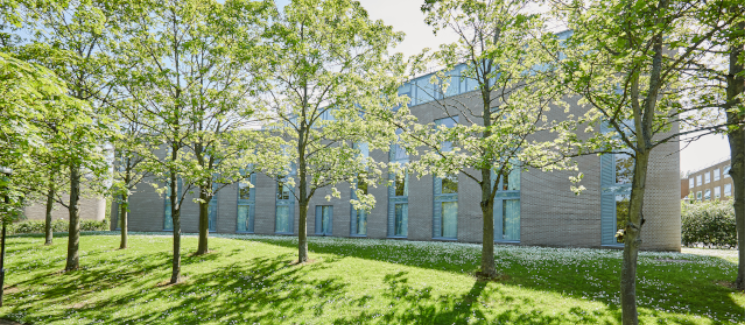
Warwick Accommodation
Finding the right accommodation is key to helping you settle in quickly.
We have 12 self-catering undergraduate halls of residence on campus.
Our student property management and lettings agency manages more than 8,000 rooms both on and off campus, and provides advice to all full-time undergraduates.
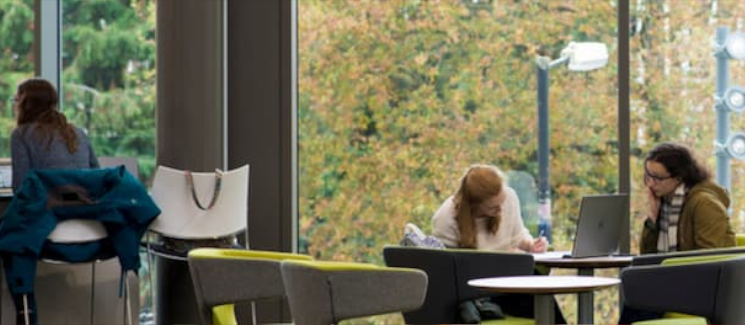
Our campus
You won't be short of ways to spend your time on campus - whether it's visiting Warwick Arts Centre, using our incredible new sports facilities, socialising in our bars, nightclub and cafés, or enjoying an open-air event. Or if you need some peace and quiet, you can explore lakes, woodland and green spaces just a few minutes’ walk from central campus.

Food and drink
We have lots of cafés, restaurants and shops on campus. You can enjoy great quality food and drink, with plenty of choice for all tastes and budgets. There is a convenience store on central campus, as well as two supermarkets and a small shopping centre in the nearby Cannon Park Retail Park. Several of them offer delivery services to help you stay stocked up.
And don't miss our regular food market day on the Piazza with tempting, fresh and delicious street food. Soak up the atmosphere and try something new, with mouth-watering food for all tastes.

Clubs and societies
We currently have more than 300 student-run societies.
So whether you’re into films, martial arts, astronomy, gaming or musical theatre, you can instantly connect with people with similar interests.
Or you could try something new, or even form your own society.

Sports and fitness
Staying active at Warwick is no sweat, thanks to our amazing new Sports and Wellness Hub, indoor and outdoor tennis centre, 60 acres of sports pitches, and more than 60 sports clubs.
Whether you want to compete, relax or just have fun, you can achieve your fitness goals.


Studying on campus
Our campus is designed to cater for all of your learning needs.
You will benefit from a variety of flexible, well-equipped study spaces and teaching facilities across the University.
- The Oculus, our outstanding learning hub, houses state-of-the-art lecture theatres and innovative social learning and network areas.
- The University Library provides access to over one million printed works and tens of thousands of electronic journals
- Three Learning Grids offering you flexible individual and group study spaces.

Travel and local area
Our campus is in Coventry, a modern city with high street shops, restaurants, nightclubs and bars sitting alongside medieval monuments. The Warwickshire towns of Leamington Spa and Kenilworth are also nearby.
The University is close to major road, rail and air links. London is just an hour by direct train from Coventry, with Birmingham a 20-minute trip. Birmingham International Airport is nearby (a 20-minute drive).

Wellbeing support and faith provision
Our continuous support network is here to help you adjust to student life and to ensure you can easily access advice on many different issues. These may include managing your finances and workload, and settling into shared accommodation. We also have specialist disability and mental health support teams.
Our Chaplaincy is home to Chaplains from the Christian, Jewish and Muslim faiths. We provide regular services for all Christian denominations and a Shabbat meal every Friday for our Jewish students. There is also an Islamic prayer hall, halal kitchen and ablution facilities.
How to apply
Learn more about our application process.

Key dates
Key dates for your application to Warwick.

Writing your personal statement
Make an impression and demonstrate your passion for your course.

After you've applied
Find out how we process your application.
Our Admission Statement
Read Warwick's Admission Statement
3 ways to connect
Talk to us
Join us at a live event. You can ask about courses, applying to Warwick, life at Warwick, visas and immigration, and more.
Warwick Experience
Take a virtual, student-led campus tour. Then join an interactive panel session, where you can hear from and chat to our current students and staff.
Student blogs
Explore our student blogs in OurWarwick. You can read about campus life from students themselves, and register to post questions directly to students.
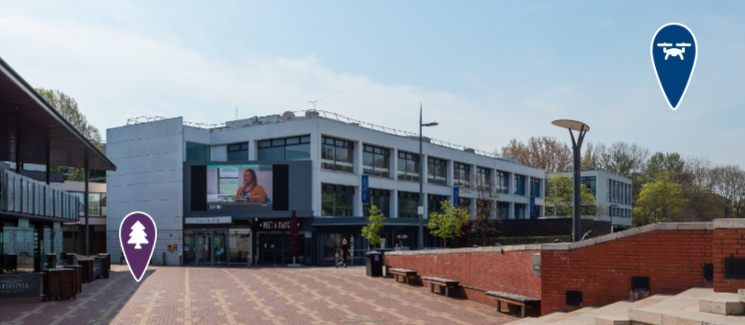
Explore campus with our virtual tour
Our 360 tour lets you:
- Watch student videos
- View 360 photography and drone footage
- Learn about facilities and landmarks
Explore our campus virtually through our 360 campus tour now

Come to an Open Day
Don’t just take it from us, come and see for yourself what Warwick is all about. Whether it's a virtual visit or in-person, our University Open Days give you the chance to meet staff and students, visit academic departments, tour the campus and get a real feel for life at Warwick.
Sign up for updates
Discover more about our courses and campus life with our helpful information and timely reminders.