
Life Sciences News
See our Latest Journal Publications
HE Bioscience Technician of the Year Award
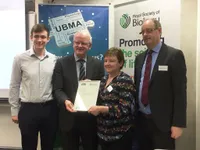 On Thursday 19 April Gill Scott, School of Life Sciences Teaching Laboratory Manager, was awarded the Higher Education Bioscience Technician of the Year Award at the University Bioscience Managers’ Association (UBMA) Annual Conference at Imperial College London. The competitive award, presented by Professor James Stirling, recognises the superb work of technical staff which underpins the bioscience research and teaching at all levels in universities across the UK. The judges were incredibly impressed with the quality and breadth of Gill’s technical work. She received a £400 prize and a free year of Royal Society of Biology membership.
Gill first came to SLS in 1978 and over the years has made a tremendous contribution to the School’s lab-based teaching and outreach activities. In 2018 Gill was instrumental in SLS delivering the International Biology Olympiad practical exams.
Gill retires at the end of April and we wish her all the best for the future.
(Photo courtesy of UBMA)
Warwick-backed state-of-the-art cryo-electron microscopy facility opened
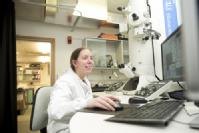 A new state-of-the-art Cryo-Electron Microscope (Cryo-EM) facility that will advance the understanding of the processes of life has been officially opened.
The Midlands Regional Cryo-EM Facility is the result of a collaboration between the University of Warwick, Nottingham, Birmingham and Leicester, led by the University of Leicester. The universities are members of the Midlands Innovation partnership. The total investment exceeds £6M with £3.7M from the Medical Research Council (MRC). The four partner Universities provided the remaining funds.
Pint of Science Coventry brings scientists out of the lab and into your local pub 14-16 May
 The public science festival, Pint of Science, is coming to Coventry for the first time this year, with experts from the Universities of Warwick and Coventry talking about their research work in a selection of pubs and venues around the city.
There are a number of talks from researchers in the School of Life Sciences:
14 May - Life is the name of the game
Professor Chris Dowson on 'Antibiotic Resistance: No drugs, bad bugs'
15 May - Drink, Drugs and Sunscreen
Professor Kevin Moffat on 'The life of fly - alcohol, sex and violoence!'
16 May - The future of health
Dr Andrew Nelson on 'Invasion of trophoblasts: maintaining prenancy'
Dr Corinne Hanlon on 'Synthetic Biology - who draws the line'
Professor R.John Ellis to be presented with 2019 Centenary Award
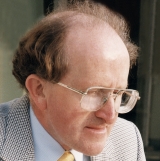 Professor R.John Ellis, an Emeritus in the School of Life Sciences, has been honoured in the Biochemical Society's annual Awards. The awards recognise scientists for the excellence of their work and the impact it has had within the bioscience community and wider society.
Professor Ellis will be presented with the 2019 Centenary Award for his pioneering research on molecular chaperones and their role in protein folding.
Professor Laura Green appointed to BBSRC Council
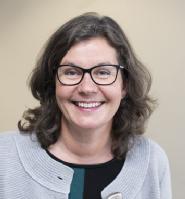 Professor Laura Green OBE, Deputy Pro Vice Chancellor (Research) at the University of Warwick, has been appointed to the Council of the Biotechnology and Biological Sciences Research Council (BBSRC).
University of Warwick brings TB awareness to Coventry on World TB Day
Scientists from the University of Warwick will be helping to promote an important public health message about tuberculosis (TB) this weekend in Coventry.
On World TB Day (Saturday 24 March) researchers from the Fullam lab at the University of Warwick will be running a public information stand at the Herbert Museum and Art Gallery to help raise awareness of TB and what they are trying to do to combat this deadly disease. They will also be at Coventry Library on Tuesday 27 March.
Physical Sciences Industry Day to welcome businesses to Warwick
Businesses from around the country are coming to the University of Warwick to learn how they collaborate with one of the world’s leading research universities.
The Physical Sciences Industry Day on 19 March will showcase Warwick’s research capabilities and how they can be directed towards the research development and productivity challenges of industry.
Attendees will also have the opportunity to meet with Warwick researchers to discuss their business needs and learn how industrial research is driving the work of universities.
Drug-producing bacteria possible with synthetic biology breakthrough
Bacteria could be programmed to efficiently produce drugs, thanks to breakthrough research into synthetic biology using engineering principles, from the University of Warwick and the University of Surrey.
Led by the Warwick Integrative Synthetic Biology Centre and the Faculty of Health and Medical Sciences at the University of Surrey, new research has discovered how to dynamically manage the allocation of essential resources inside engineered cells - advancing the potential of synthetically programming cells to combat disease and produce new drugs.
The researchers have developed a way to efficiently control the distribution of ribosomes – microscopic ‘factories’ inside cells that build proteins that keep the cell alive and functional – to both the synthetic circuit and the host cell.
Global mapping of planktonic "chameleons"
Cyanobacteria of the genus Synechococcus are ubiquitous in the world ocean and contribute significantly to both the marine food chain and the carbon cycle. Like chameleons of the plankton world, some of them are able to change pigmentation to match the ambient light color. Yet, their distribution or abundance has remained unknown so far. Research scientists from CNRS and CEA, together with international collaborators including Professor Dave Scanlan from the University of Warwick, have just demonstrated these color-shifters are the most abundant group of Synechococcus in the ocean —representing about 40% of the whole population at depth and high latitudes. This adaptive capacity is an important asset for such planktonic organisms that are carried around by currents in areas where the color of the water varies as it allows them to keep photosynthesizing efficiently and to supply energy to the rest of the food web. This discovery represents a major breakthrough in our understanding of these organisms, which prove to be excellent bio-indicators of climate change.
Their findings are published in PNAS (February 12, 2018)
Interdisciplinary Biomedical Research Building
 The University plans to invest £54.3M in a new state-of-the-art research building on the Gibbet Hill campus that will bring together up to 300 biomedical researchers from across the School of Life Sciences and Warwick Medical School to fight human diseases.
Odd genetics of a tri-sexual worm
In a recent paper published in Current Biology, Dr Andre Pires da Silva and colleagues describe a species of nematode that has three sexes - male, female and hermaphrodite. Auanema rhodensis, the worm featured in the study, uses an unusual reproductive strategy with only one sex chromosome (X). Hermaphrodites and female worms have two X chromosomes; males have just one X chromosome. Researchers found that some hermaphroditic worms will produce sperm with two X chromosomes and eggs with no chromosomes. When the hermaphroditic worms and male worms mate, only more male worms are produced. One possible explanation is that male worms may be important for the species' genetic diversity, providing A. rhodensis with the ability to adapt to changing conditions more efficiently than other species.
- Read paper: Sex- and Gamete-Specific Patterns of X Chromosome Segregation in a Trioecious Nematode Current Biology, Vol 28, Issue 1 p93-99e
- Interview in Newsweek
Industry Partnering Day 28 Feb - Opportunities and innovation in academia-industry interactions
Come and discuss opportunities and innovation in academia-industry interactions in the School of Life Sciences on Wednesday 28 February.
Our Industry Partnering Day will provide you with a range of information on how to work with our scientists including;
- Joint funding opportunities
- Access to state-of-art facilities
- Introductions and collaborations with world-leading experts
- From student internships or highly trained personal exchanges to funded development and research programmes
- Innovation tokens worth up to £5000 that can be used for collaborative work with SLS
- Our research interests and technology platforms extend across the breadth of plant, crop, biomedical, drug discovery, biotechnology, environmental and analytical research.
The day will start with short presentations about different types of successful partnerships that are possible, followed by a lunchtime networking event.
In the afternoon, most importantly, we would like to hear from you about your needs and experiences so that we can offer solutions to help improve research, development, innovation and competitiveness in your company, taking advantage of existing and future innovation and investment opportunities in the UK.
Later in the afternoon there will be the opportunity to meet with our researchers, tour our facilities and engage in extended discussions, including an evening drinks and dinner reception.
VirionHealth receives up to $4.2M from DARPA
University of Warwick spin-out company, VirionHealth - a new biotechnology company developing novel therapeutics for respiratory viral infections, has announced that it has won non-dilutive funding worth up to $4.2 million from the US Defense Advanced Research Projects Agency (DARPA).
Founded in 2017 on pioneering research of Professors Easton and Dimmock in the School of Life Sciences, VirionHealth is developing a new class of biological antivirals to create improved therapeutics for respiratory viral infections, focusing on prevention and treatment of influenza and respiratory syncytial virus (RSV). The company is a world leader in the development of precisely engineered, non-infectious, defective interfering particles. www.virionhealth.com
Read Press Release
Sprout science
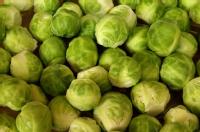 On Monday 18 December, Dr Guy Barker spoke on BBC Midlands Today on how Warwick Crop Centre are improving sprouts through traditional plant breeding. Watch www.bbc.co.uk/iplayer/episode/b09jg8fl/midlands-today-evening-news-18122017 (from 23 minutes)
Dr Barker also spoke with Phil Upton on BBC Coventry and Warwickshire, describing how researchers are utilising genetic diversity from the UK Vegetable Genebank to enhance the appearance, quality and resistance of sprouts. Listen at www.bbc.co.uk/programmes/p05nlj64 (1:41-1:45)
New TB drugs possible with understanding of old antibiotic
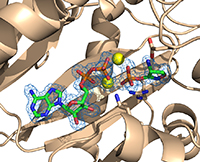 Tuberculosis, and other life-threatening microbial diseases, could be more effectively tackled with future drugs, thanks to new research into an old antibiotic led by Professor David Roper at Warwick’s School of Life Sciences and Dr Luiz Pedro Carvalho from The Francis Crick Institute.
NERC CENTA Environmental Science PhD Studentships available
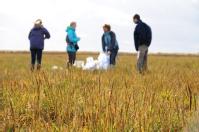 A number of fully funded studentships in environmental sciences are available to UK and EU students that meet the residency and qualification eligibility criteria. These studentships are available as part of the NERC DTP CENTA consortium. Application deadline: 22 January 2018.
View available projects
‘Lost’ 99% of ocean microplastics to be identified with dye?
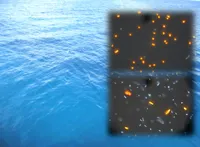 The smallest microplastics in our oceans – which go largely undetected and are potentially harmful – could be more effectively identified using an innovative and inexpensive new method, developed by researchers at the University of Warwick.
New research, led by Gabriel Erni-Cassola and Dr. Joseph A. Christie-Oleza from Warwick’s School of Life Sciences, has established a pioneering way to detect the smaller fraction of microplastics – many as small as 20 micrometres (comparable to the width of a human hair or wool fibre) - using a fluorescent dye.
Lettuce at risk from Fusarium wilt
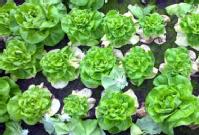 An outbreak of an aggressive soil-borne fungus has been reported in UK glasshouse lettuce crops for the first time and growers are being urged to look out for symptoms to get diagnosis early.
Lettuce Fusarium wilt has previously been found in mainland Europe, but the identification of this strain of the disease in Lancashire, was the first time it has been confirmed in the UK. The pathogen, which causes lettuce to wilt and die, is a particularly aggressive strain with no known treatments or resistant varieties currently available.
The Agriculture and Horticulture Development Board (AHDB), an advisory body for growers, has commissioned the University of Warwick to deliver a technical review to compile detailed information on management options to help minimise the impact on the UK lettuce industry. The full report will be published in early February 2018, but information will be shared with industry as the review proceeds.
Growers who suspect lettuce Fusarium wilt in their crops should send samples for diagnosis. Dr John Clarkson from Warwick Crop Centre, at the University of Warwick, will accept lettuce samples for free testing. For further information visit horticulture.ahdb.org.uk/lettuce-fusarium-wilt-and-root-rot
Dr John Clarkson, said: “This disease is very serious. It is very aggressive and difficult to get rid of because the fungus produces long-life spores that survive in the soil.”
SLS Student wins Photo Competition
 PhD student Fabio Rodrigues has been awarded the best photographer by @uniwarwick for his autumn picture of campus.
Midlands Integrative Biosciences Training Partnership (MIBTP) - 4 year studentships available
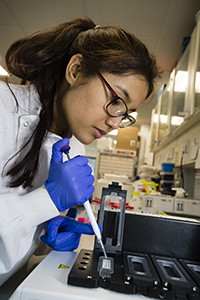 The Midlands Integrative Biosciences Training Partnership (MIBTP) is a BBSRC-funded doctoral training partnership between the University of Warwick, the University of Birmingham and the University of Leicester. The MIBTP has an ambitious vision to deliver innovative, world class research across the Life Sciences to boost the growing Bioeconomy in the Midlands and across the UK.
PhD Studentship projects will be focused in vital research areas such as food security, bio-energy and quantitative biology. Students from a wide diversity of academic backgrounds are encouraged to apply. Projects are available for those with creative drive in both theoretical (IT and mathematical) and experimental (biology, biomedicine, chemistry, biotechnology) research.