
IER News & blogs
Clare Lyonette invited as an expert contributor to a French project on women in managerial roles
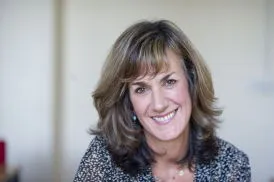 Dr Clare Lyonette is the UK expert on a new French project, funded by the ANR: 'Quel genre de managers avant 40 ans ? Faits et discours dans quatre pays européens'. She and the other team members met in Aix-en-Provence in February 2017 to discuss the research plans, based on an earlier 2015 meeting in Paris. Clare will be involved in work package 7: 'Articulation of personal and professional spheres'. The mixed-methods project involves quantitative data analysis of managerial roles and new semi-structured interviews with managers in 4 countries. The project is being coordinated by Vanessa di Paola (Aix Marseille Univ, CNRS, LEST, Car Céreq), Arnaud Dupray (Céreq, Aix Marseille Univ, CNRS, LEST), Dominique Épiphane (Céreq) and Stéphanie Moullet (Aix Marseille Université, CNRS, LEST, IRT, Car Céreq). For more information.
Visiting professorship at INETOP/CNAM, Paris
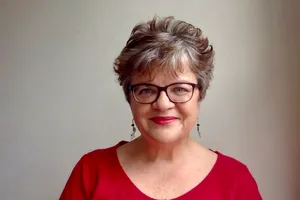 Professor Rachel Mulvey will be in Paris all this month, working at INETOP/CNAM - France's national institute for the study of work and career. Rachel is no stranger to CNAM, having taught in 2015 on the ECADOC summer school which brought together doctoral students from across the globe, all doing research on career. She returned last year as examiner on a PhD jury and is both honoured and delighted to be invited back, this time as visiting professor.
In addition to its research and scholarly work, the institute offers Masters programmes in both occupational and career psychology. Rachel will be running workshops on qualitative methods for these students who are now in their dissertation semester - and for doctoral candidates too. She is contributing to European research on 'decent work' led by Valérie Cohen-Scali and Jean-Luc Bernaud. This elaborates themes considered at the UNESCO conference on life design and decent work.Rachel will present findings from the two CEDEFOP studies to colleagues at the institute, showcasing the findings by the French country team (which she led) set in the context of the wider study undertaken with IER colleagues Jenny Bimrose, Alan Brown and Sally-Anne Barnes.
New school for the old school: careers guidance and counselling - Blog from Dr. Deirdre Hughes OBE
 These are critical times for career guidance and counselling in education. The implementation of up-to-date guidance and counselling in education must not be seen as something separated from educational reform. There is a critical tension between progressive and regressive tendencies in both education and careers work. The case for reform requires careful attention leading to innovative solutions.
IER welcomes Professor Paul Edwards
 Professor Paul Edwards will be joining IER as an Honorary Professor. His research career began with the study of workplace industrial relations and industrial conflict. He has subsequently studied new management practices in the workplace and managerial careers, both in the UK and in international comparison. Current research is focusing on small firms and their employment practices, with a particular emphasis on firms run by new migrant to the UK.
Making Jobs Better
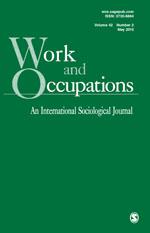 Co-edited by IER Director Chris Warhurst, a special issue of Work and Occupations has just been published on ‘Making Jobs Better’. It examines the different actors involved in trying to improve job quality – firms, governments, trade unions and community organisations.