
IER News & blogs
What are the implications of COVID-19 for Coventry and Warwickshire? Dr David Owen
 The UK, like most other countries, introduced a “lockdown” in late March in order to reduce contact between people thereby reducing infections and “taking pressure off” the National Health Service. This involved preventing most businesses involving social contact to stop operating and for workers to work from home wherever possible. The implication was a huge cut in economic activity. The National Institute for Economic and Social Research made estimates of considerable economic recession. The Bank of England’s view (on May 7th) of the probable impact of the lockdown is that the UK economy will shrink by 14% in 2020 but rebound quickly, with growth of 15% in 2021.
This blog presents tentative estimates of the possible impact of the lockdown on employment and enterprises within the Coventry and Warwickshire local enterprise partnership (LEP) area and for small areas within Coventry and Warwickshire.
Measuring the share of workers in work-from-home and close personal proximity occupations in a developing country – Blog by Jeisson Cardenas Rubio and Jaime Montana Doncel*
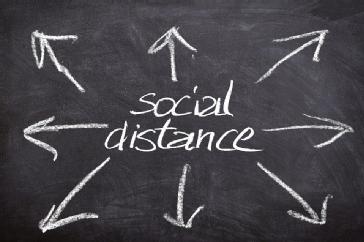 The COVID-19 pandemic and its social distancing measures have brought unprecedented socio-economic challenges worldwide. One of the most urgent questions is how the labour force will be affected by the pandemic. The answer to this question will have considerable impact on the countries’ productivity, poverty and unemployment rates, etc. Consequently, the measurement of jobs, which can be performed without increasing the risk of contagion, has become a priority in the world. Given rich sources of information such as the Occupational information network (O*NET), more advanced countries such as the United States (U.S.) have started to estimate the number of jobs that can be performed at home (teleworkable jobs) or are at higher risk of contagion because their tasks involve close proximity with others (Dingel and Neiman, 2020; Mongey and Weinberg, 2020).
Do the self-employed have a future in the UK? Blog by Chris Warhurst
 For nearly two decades self-employment has been an important source of job growth for the UK economy. However the coronavirus crisis has highlighted how risky it is being self-employed. Current UK Government measures to support the self-employed might not be enough to stop a flight from self-employment once the crisis ends.
Managing flexible working: learning to cope with the new normal? Blog by Professor Clare Lyonette and Beate Baldauf

The ramifications of the current Covid-19 crisis are likely to be felt in all areas of our lives. Many of the future projections we hear and read about every day are understandably stark and doom-laden, but are there any potentially positive implications of the pandemic?
The sharp rise in the number of people being required to work solely from home during the current crisis has led to a surge in interest in the longer-term outcomes of wider flexible working, with many researchers in the UK and elsewhere discussing Covid-19 as a possible turning point in our attitudes towards greater flexibility (Moen, 2020; Slaughter and Bell, 2020; Bevan, 2020).
Research on lifelong guidance policy and practice in the EU just published
 Lifelong guidance policies and practices are viewed as crucial parts of current EU policy initiatives around validation of learning and the Pillar of Social Rights.
The aim of the research, undertaken by Dr Sally-Anne Barnes together with colleagues at the IER and the Finnish Institute for Educational Research at the University of Jyväskylä, was to examine lifelong guidance policies and practices and to provide an evidence base for priority-setting, as well as supporting dialogue with stakeholders on lifelong guidance and, more widely, skills strategies.
The final report presents findings from the research identifying 11 key features of lifelong guidance systems in the EU, lifelong guidance actors and innovations in practice. It concludes with some recommendations for the Commission and those in working in the careers field. Read the press release here.