
IER News & blogs
New cohort of Nigerian officials visit IER for training
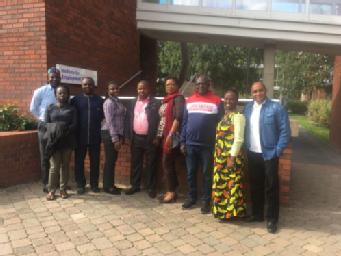 In September IER hosted a second cohort of labour market officials from the Nigerian Government’s Industrial Training Fund. The visitors receive training in the labour market data and analysis techniques developed by IER, covering: higher and vocational education; labour market classification, measurement and forecasting; and careers guidance and labour market information for all. The aim is to help build greater capacity in labour market analysis in Nigeria as the country seeks to diversify its economic base.
Invitation to a QuInnE Dissemination Event
 The Horizon 2020 funded QuInne project presents key findings in late September, focusing on questions such as: Does innovation produce more and better jobs? Does innovation combat or exacerbate inequalities? What aspects of job quality facilitate innovation?
Presenters include Professor Chris Warhurst.
The event takes place on 26 September 2018, 15.00 – 17.00, in Brussels and registrations are requested before 19 September. For further event details read here.
IER leads on productivity and skills analysis
 The Institute for Employment Research has produced the annual report for the West Midlands Productivity and Skills Commission. The report synthesises the Commission’s understanding of the regional productivity and skills challenges across the Five Foundations of Productivity - Place, innovation, Infrastructure, People and Ideas/Innovation (as outlined in the Industrial Strategy) - within three of the region’s priority sectors – Business, Professional and Financial Services (BPFS), Building & Construction Technologies, and Automotive.
This analysis forms the basis for a set of recommendations for each of the Foundations.
IER celebrates the graduation of 5 PhD students
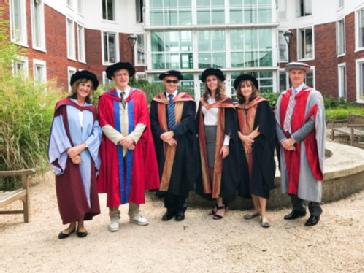 On 20st of July, IER staff and students celebrated the graduation of five PhD students: Dorothee Gnaedinger, John Gough, Mohd Onn Rashdi Abd-Patah, Szilvia Schmitsek and Olga Siemers.
Four members of staff were also involved in the academic procession to honour this wonderful achievement.
All of our new doctors have succeeded in juggling work and/or family commitments while coping with the many stresses and strains of the PhD 'journey'.
We wish them all the best in their future careers. Huge congratulations.
Warwick IER facilitates Regional Skills Summit
 The IER facilitated the Regional Skills Summit on the 3rd July. Hosted by the Edge Foundation, the skills summit brought together the Skills Directors of the Mayoral Combined Authorities. Liverpool City Region and the Greater London Authority Skills Directors presented their recently published skills plans, and the summit concluded with a presentation by Jonathan Barr of the OECD. The Skills Summit continues IER's recent work into the sub regional skills agenda which has recently included a feasibility study of the Skills Advisory Panels (for DfE) and writing the Annual Report for the West Midland's Combined Authority's Productivity and Skills Commission. Read the report written by Peter Dickinson and Chris Warhurst here.