
IER News & blogs
Nurturing the talent pipeline in Northern Ireland
 The way in which teenagers think about their future in education and employment has a significant impact on what becomes of them as adults. Good-quality careers education and young people's exposure to the world of work can make a real difference to academic, social and economic outcomes, according to IER's Dr Deirdre Hughes OBE Principal Research Fellow and Chair of the Senior Advisory Group for Skills Northern Ireland. Deirdre is chairing a breakfast meeting with NI business and education leaders, including a keynote address by Peter Weir MLA, Minister of Education, Northern Ireland.
Organised by Prospects Events, sponsored by NIE Networks and supported by Ulster University, a brand new major Skills Northern Ireland event at the Titanic Exhibition Centre on 8 & November 2016 offers young people and parents the opportunity to meet employers, discover careers and learn more about Northern Irelands major skills shortages.
Upcoming roundtable event - ICT skills and online platforms for social inclusion
 IER's Dr Sally-Anne Barnes and Professor Anne Green in collaboration with Professor Leela Damodaran from Loughborough University will be hosting a free roundtable event to identify the role of online platforms in providing opportunities for a better work-life balance in terms of new modes of working and new types of community engagement.The event to be held at the University of Warwick on 28 November (12-5pm) is being funded by the EPSRC Balance Network.
If you would like to attend please contact Lynne Marston. Places are limited and will be offered on a first-come, first-served basis.
Policy for in-work progresson
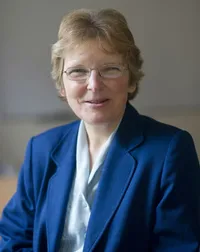 IER's Professor Anne Green and Dr Paul Sissons from Coventry University spoke at the Employability and Skills Wales Convention in Cardiff on 'Linking growth sectors and sustainable labour market outcomes: designing policy for progression'. Their presentation included data analysis from an ESRC-funded project with colleague Neil Lee (LSE) on 'Harnessing Growth Sectors for Poverty Reduction' and findings from an international literature review focusing on initiatives to foster progression in selected sectors, with a particular emphasis on promising approaches from the US.
Sissons, P., Green, A. and Lee, N. (2016). Supporting progression in growth sectors: A review of the international evidence. Cardiff: Public Policy Institute for Wales.
Welcome to Dr Angela Knox
 IER warmly welcomes Dr Angela Knox, Associate Professor of Work and Organisational Studies, from The University of Sydney Business School who is visiting us for the next month. Dr Knox's research focuses on the service sector, especially the hospitality industry, and includes employment regulation, precarious work and job quality. Dr Knox will be collaborating with colleagues in IER on researching job quality.
Adult Education Strategy: England
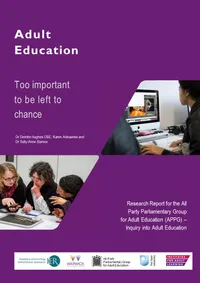 Findings from IER’'s ‘Call for Evidence’, Town Hall meetings and interviews with senior leaders highlight a stated danger that national policy for adult education could disappear by 2020. Dr Deirdre Hughes OBE delivered a presentation to the All Party Parliamentary Group for Education this week. She has been formally invited to review and discuss the current policy and funding context, including key developments since July 2016. The APPG Chair, Chi Onwurah MP and Vice Chairs, Baroness Goudie and Peter Bottomley MP will jointly host the event. For more on the project.
Hughes, D., Adriaanse, K. and Barnes, S-A. (2016) Adult Education: Too important to be left to chance. London: All Party Parliamentary Group for Adult Education.