
Life Sciences News
See our Latest Journal Publications
8th UK Purine Club Meeting Christmas Symposium 2017
We are pleased to announce that the 8th UK Purine Club Symposium will be held at the University of Warwick Gibbet Hill Campus on Monday 11 December 2017.
The programme includes lectures by:
- Martin Mahaut-Smith, Leicester
- Tobias Engel, Dublin
- Mark Wall, Warwick
- Arthur Butt, Portsmouth
The symposium will be followed by a Sarissa Biomedical workshop on applications of microelectrode biosensors in physiological research.
You are invited to submit abstracts for oral or poster communications and they will be published in Purinergic Signalling.
Registration fees (includes refreshments during the day including lunch and an evening reception):
£40 Academics & Post-Docs,
£30 PhD Students.
For further details and to register visit UK Purine Club Symposium 2017
What to teach an aspiring scientist
 Most people perceive scientists as logical and determined people, their mission to find the answer through painstaking research. So what are two of the most important things you can teach an aspiring scientist to help them on the road to success? Critical thinking? Statistics? Not necessarily. It’s the ability to think creatively, and a capacity to deal with failure says Professor Kevin Moffat.
A Critical Reflection on the 28th International Biology Olympiad
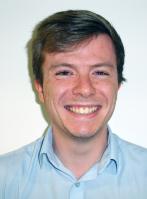 The 28th International Biology Olympiad (IBO) took place at the University of Warwick between 23 – 30 July 2017 with 264 international competitors (aged 14 – 18) competing in a series of practical and theoretical exams devised by School of Life Sciences staff and colleagues from the Royal Society of Biology.
Branagh Crealock-Ashurst, our Student Experience and Outreach Assistant, has written a critical reflection on the IBO from how the event was logistically organised to a semi-statistical analysis of the overall results of the competition and what they meant in terms of the pedagogical approach to examination. The paper entitled 'A Critical Reflection on the 28th International Biology Olympiad' was published in the October issue of Exchanges: the Warwick Research Journal (available at http://exchanges.warwick.ac.uk/article/view/221).
Colon cancer breakthrough could lead to prevention
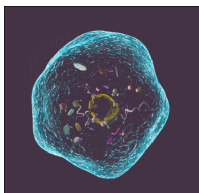 Colon cancer, Crohn’s, and other diseases of the gut could be better treated – or even prevented – thanks to a new link between inflammation and a common cellular process, established by Dr Ioannis Nezis and colleagues.
Crops evolving ten millennia before experts thought
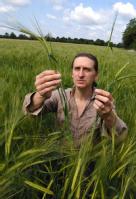 Ancient hunter-gatherers began to systemically affect the evolution of crops up to thirty thousand years ago – around ten millennia before experts previously thought – according to new research by Professor Robin Allaby.
Read Press Release
Antibiotics and farming
 Professor Elizabeth Wellington talks to Adam Rutherford on BBC Radio 4 about how the agricultural use of antibiotics is contributing to the global spread of resistance to them on this week's Inside Science: http://www.bbc.co.uk/programmes/b0977v58
VirionHealth Raises Series A Funding from Abingworth
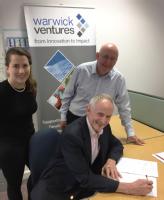 VirionHealth Ltd, a new biotechnology company developing novel therapeutics for respiratory viral infections, today announced that it has raised up to £13 million in Series A funding from Abingworth, the international investment group dedicated to life sciences.
VirionHealth, founded on pioneering research by Professors Nigel Dimmock and Andrew Easton at the University of Warwick’s School of Life Sciences, is a world leader in the development of precisely engineered, non-infectious, defective interfering particles. This new class of biological antiviral acts by outcompeting replication of infectious viruses to both prevent and treat viral infections.
(Image: Laura Lane from Warwick Ventures, Professor Andrew Easton and Professor Nigel Dimmock on day of signing)
Molecular Microbial Ecology Group Meeting (MMEG 2017)
MMEG 2017 will be held between 14-15 December 2017 at the University of Warwick. The event is a two-day symposium for postgraduate students and early career postdoctoral researchers to present their research in an informal setting. The meeting also aims to provide an opportunity for networking and discussion of research in the fields of microbial ecology and environmental microbiology.
Reaching out at New Scientist Live
The School of Life Sciences, Engineering and Physics are teaming up this week to deliver exciting outreach activities at New Scientist Live.
Taking place from Thursday 28 September – Sunday 1 October at the ExCeL London, New Scientist Live sets out to be ‘the world’s most exciting festival of ideas’, attracting over 22,000 science curious visitors to the event. When an exhibitor space became available, the School of Life Sciences Outreach Team, led by Professor Kevin Moffat, were quick to seize this opportunity to showcase cutting edge research and study at Warwick.
Our activities at the stand cluster broadly around the theme of Antimicrobial Resistance, spanning timescales from medieval plagues to contemporary Tuberculosis and futuristic treatments using viruses to cure infection. Our exciting line up includes a virtual reality protein explorer, plague-infested Jelly Babies propelled from trebuchets, an ‘Electronic Nose’ that can sniff out your breath, a pestilent poetry competition…
You can find out more about Warwick activities at New Scientist Live at www.warwick.ac.uk/newscientistlive
Follow us on Twitter @SlsOutreachWrwk
Brain cells that control appetite identified for first time
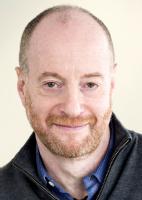 Dieting could be revolutionised, thanks to the ground-breaking discovery of the key brain cells which control our appetite. Professor Nicholas Dale in the School of Life Sciences has identified for the first time that tanycytes – cells found in part of the brain that controls energy levels – detect nutrients in food and tell the brain directly about the food we have eaten.
Read Press Release
Antimicrobial resistance tackled with new £2.85m PhD Training Programme
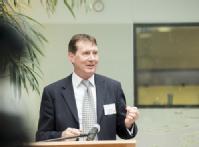 New scientists will be trained to explore ways to tackle antimicrobial resistance - one of the greatest emerging threats to human health – with the creation of a £2.85m national PhD Training Programme, funded by the Medical Research Council and part-led by the University of Warwick.
Professor Chris Dowson from Warwick’s School of Life Sciences is part of the Programme Leadership Team, and has been integrally involved with the establishment of the training programme.
Read Press Release
Cells programmed like computers to fight disease
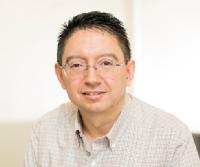 Cells can be programmed like a computer to fight cancer, influenza, and other serious conditions – thanks to a breakthrough in synthetic biology by the University of Warwick.
Led by Professor Alfonso Jaramillo in the School of Life Sciences, new research has discovered that a common molecule - ribonucleic acid (RNA), which is produced abundantly by humans, plants and animals - can be genetically engineered to allow scientists to program the actions of a cell.
Read Press Release
Asian hornet “adds to growing number of threats to honeybees” – Warwick research on BBC
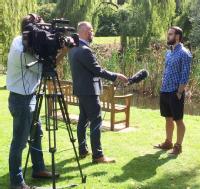 Research to help prevent the spread of Asian hornet across the UK - carried out by the University of Warwick - was recently featured on BBC Midlands Today and BBC Online.
Led by the Warwick’s Zeeman Institute for Systems Biology & Infectious Disease Epidemiology Research (SBIDER), the recent study predicts that Asian hornet – a voracious predator of honey bees and other beneficial insects – could colonise the UK within two decades.
The BBC’s David Gregory-Kumar interviewed Dr Daniel Franklin at the School of Life Sciences.
Warwick’s iGEM students take on E.coli
 Warwick’s 2017 iGEM team, Blueprint 361, is determined to make E.coli work in their favour. The team is made up of 5 engineering undergraduates, 4 students from the School of Life Sciences and a chemist, and are supervised by Dr Alfonso Jaramillo.
Their project is going to use E.coli to produce a biopolymer, which will then in turn be used as the bio-ink for their 3D printer. Over the course of the summer months, the team have been relentlessly working away in many labs around the campus to use this system for the creation of surface coatings with improved biocompatibility and osseointegration. If successful, the team could see revolutionary increase in both the strength and versatility of artificial joints and dental implants.
Excitingly, further development could even see this technology lead to the 3D printing of biological structures, such as trachea frameworks or even organ scaffolds.
The Blueprint 361 team will be taking their project to Boston in November 2017 to compete in the iGEM Jamboree against over 300 other teams from around the world. The team are urgently seeking additional funds in order to allow them to further develop their project. Can you help them? If so, please email
igem@warwick.ac.uk.
iGEM is an international synthetic biology competition, which was established by MIT in 2003. Each iGEM team works over the summer to produce a new genetically engineered biological system, and competes in the following categories: the environment, manufacturing, diagnostics, therapeutics and food.
Keep up to date with the team here:
Facebook @warwickIGEM
Twitter @warwickigem
Instagram @igemwarwick
Asian hornet to colonise UK within two decades without action
 The yellow legged or Asian hornet – a voracious predator of honey bees and other beneficial insects – could rapidly colonise the UK unless its spread is combatted, according to new research by the Universities of Warwick and Newcastle, working with the National Bee Unit.
Professor Matt Keeling, from Warwick’s Zeeman Institute for Systems Biology & Infectious Disease Epidemiology Research (SBIDER), predicts that if Asian hornet nests are left to thrive in the UK, there could be hundreds of thousands of them in just over two decades – putting a critical strain on British populations of honey bees and other beneficial insects.
GP-based testing for HIV is cost-effective and should be rolled out in 74 local authorities
 Offering HIV testing to people at health checks when they register at a new GP surgery in high-prevalence areas is cost-effective and will save lives.
That’s according to a study, published in The Lancet HIV, involving over 86,000 people from 40 GP surgeries.
Using a mathematical model which was co-developed by Professor Deirdre Hollingsworth at the University of Warwick that includes all the costs associated with HIV testing and treatment, the team show that primary care HIV screening in high prevalence settings becomes cost-effective in 33 years (according to National Institute for Health and Care Excellence [NICE] criteria).
International Biology Olympiad hosted by Life Sciences
The International Biology Olympiad (IBO), which takes place every year in different locations across the globe, sees pre-university students compete in a series of practical experiments and theoretical exams in what is the biggest biology competition in the world.
The competition, which spans a week in duration, takes place from 23 - 30 July, and - after a successful bid back in 2012 - will be taking place this year in the United Kingdom at the University of Warwick's School of Life Sciences.
Life Sciences Graduation and Awards 2017
 On Friday 21 July, graduands from the School of Life Sciences attended the Summer Graduation Ceremony held in Butterworth Hall, Warwick Arts Centre.
Multi-million-pound investment in a regional cryo-electron microscopy facility
A state-of-the-art Midlands regional cryo-electron microscopy (Cryo-EM) facility has been established, following a successful bid by the Universities of Warwick, Nottingham and Birmingham, led by the University of Leicester.
The total investment exceeds £6M, with £3.7M from the Medical Research Council. The four partner Universities will provide the remaining funds, with the University of Warwick contributing £460,000.
The co-applicants of the project from Warwick were Dr Corinne Smith from the School of Life Sciences, with Professors Mohan Balasubramanian and Rob Cross from Warwick Medical School.
As part of the investment, a new 200KV cryo transmission electron microscope will be placed in the Advanced Bioimaging Research Technology Platform, located within Warwick’s School of Life Sciences.
SLS Researchers on Television
Two of our researchers recently featured on television programmes showcasing their expertise:
On 12 June, Virologist Professor Andrew Easton appeared on Channel 4’s ‘How to Stay Well’ programme, ‘Sneezes, Mobiles & Lyme Disease’, investigating how far a sneeze travels.
www.channel4.com/programmes/how-to-stay-well/on-demand/65113-001
On 19 June, Experiment Manager Andy Jukes, from Warwick Crop Centre, was on BBC One’s ‘Supermarket Secrets’ discussing the testing of chilli heat with Greg Wallace.
www.bbc.co.uk/iplayer/episode/b08w8r98/supermarket-shopping-secrets-series-1-1-war (42:28-46:39).