
IER News & blogs
Congratulations to Professor Peter Elias CBE
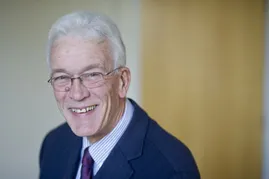 Professor Peter Elias has just celebrated over 40 years at the University of Warwick, which was recognised at a special long service awards ceremony with guests and other members of the university.
At IER, Peter has developed methods for the measurement and analysis of labour market dynamics and has a keen interest in the classification of labour market activities. His most recent work has been on occupational classification which has taken him to over 50 countries.
Knowledge, interchange & collaboration: Anne Green visits South Africa
 In late September, IER's Anne Green travelled to South Africa at the invitation of the Human Sciences Research Council under the auspices of a National Research Foundation Knowledge, Interchange & Collaboration Grant. The purpose of her visit was to exchange knowledge on tackling unemployment issues in the UK, in order to feed into learning on poverty and inequality issues in South Africa. Anne gave a presentation at the Society of South African Geographers Centenary Conference in Stellenbosch and then travelled to Pretoria where she gave a Workshop and a Seminar on unemployment issues and labour market geographies.
Upcoming event - A way forward for sustainable cities research
IER's Professor Anne Green and Dr Erika Kispeter will give a presentation entitled 'Economic Sustainability Formulating Inclusive Growth Agendas for Cities: A Focus on Labour Markets' at a conference which celebrates the UN World Cities Day on 31 October. The presentation draws on a recently completed study, International policy and practice review: how do cities lead an inclusive growth agenda?, Anne and Erika conducted with Paul Sissons (University of Coventry) and Francesca Froy (Whose City?) for the Joseph Rowntree Foundation.
The conference is organised by the Sustainable Cities Global Research Priority of the University of Warwick and aims to offer the opportunity to hear more about the wide variety of research being undertaken in the cities space.
Work Experience Week #WEWeek2016
 Dr Deirdre Hughes OBE delivered a keynote presentation at the official launch of Work Experience Week at the Guildhall, London. Work Experience Week is dedicated to raising awareness of the benefits of high quality work experience. It covers all experiences of work, from apprenticeships to traineeships, internships to volunteering as well as more traditional work experience programmes. It was an opportunity for organisations across the country to host activities showcasing their work experience provision, and to demonstrate the difference a high quality placement can make to an individual’s employment prospects and life. This year’s launch event showcased experiences of the world of work for young people that help employers develop a talent pipeline for their businesses and expand development opportunities for their existing workforce.
New report - Graduates in non-graduate occupations
A recent IER report prepared for HEFCE and SRHE IER's Dr Heike Behle compares the early pathways of graduates from two leaving cohorts: those who graduated in 1999 (‘class of 1999’) and those who graduated from three year courses in 2009 and from four year courses in 2010 ('class of 2009/2010'). It shows that the proportion of employed graduates working in non-graduate jobs during their first year after graduation has remained high with approximately 36 per cent of all employed graduates from three year courses and, respectively 30 per cent of all employed graduates from four year courses working in non-graduate jobs fifteen months after graduation.
Behle, H. (2016) Graduates in non-graduate occupations (Report prepared for HEFCE and SRHE). London: Higher Education Funding Council for England.