
IER News & blogs
Chris Warhurst awarded Fellowship by the Academy of Social Sciences
 In its spring announcements, Director of IER, Professor Chris Warhurst, has been conferred as a Fellow of the Academy of Social Sciences.
Many congratulations from all at IER on the award.
Book published: Introduction to public services
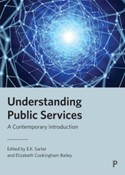 A new book on public services, co-edited by IER'S Katharina Sarter has been published by Policy Press. Understanding Public Services. A Contemporary Introduction provides an accessible and comprehensive account of the context within which public services operate, their core functions and internal workings and explores emerging and future developments and challenges.
Understanding how skill systems can better respond to meeting skill demands
IER's Professor Terence Hogarth has successfully secured a Horizon Europe for this project Skills2Capability. The project is about understanding how skill systems across Europe can reduce the level of skills mismatch in their labour markets.
New Futuretrack Reports: Ten Years On - and the impact of the pandemic on graduate careers
 The publication of the Futuretrack Stage 5 study conducted in 2019, led by Professors Peter Elias and Kate Purcell and funded by the Nuffield Foundation, showed ‘how the majority of graduates had by then achieved reasonable job security, with many balancing work and parenting or other caring roles when the pandemic hit’ (see press release). In 2020, the research team went back to respondents to investigate how they had been affected by the Covid restrictions and economic impact and conducted Futuretrack Stage 6.
For full details of the research see:
- the report on the Covid-19 impact: Covid 19 and graduate careers
- a slightly revised version of the report published in March 2021: Ten Years On – the Futuretrack Graduates
- a short report that summarises and draws the implications of both the above What a difference a year makes: the impact od Covid 19 on graduate careers
Building Back Better? Creative Freelancers and Learning from the Covid-19 Experience Throughout the pandemic
 IER and Coventry University undertook research into the contribution of creative freelancers to the economic and place-based impacts of the creative industries. The aim of the research was to develop new understandings of the role, contribution and challenges of creative freelance work – examining the experiences and different business models of creative freelancers. With the onset of the pandemic, the research also focused on the impact of COVID-19 on the work and lives of creative freelancers.
The findings from the research have been presented in a discussion paper published by Nesta's Creative Industries Policy and Evidence Centre (PEC). The discussion paper identifies how creative freelancers generate value in their immediate place and places, and presents different types of creative business models, encapsulating the diverse experiences of freelancers and their contribution to economy and society. It also identifies the policy implications of the analysis. The discussion paper is available here.