
IER News & blogs
Technology, austerity and employability in urban labour markets
 Professor Anne Green has had an article published in the journal Urban Studies. The article discusses two key changes affecting employability, labour market operation and policy delivery are austerity and the expansion of the use of information and communication technologies (ICT), especially web-based technologies. Increasingly, given pressures for cost savings and developments in ICT, employers’ recruitment and selection strategies are at least partly web-based, careers guidance and public employment services are moving towards ‘digital by default’ delivery and job seekers are expected to manage their job search activity and benefit claims electronically. It asks the question: what are the implications of austerity and technological change for employability?
The article presents a critical review of the literature on ICT and its relation to, and implications for, employability in a context of austerity. A new framework for employability is presented and those aspects of employability where ICT plays a key role are highlighted. It is concluded that in the context of austerity and technological change more is demanded of individual job seekers/workers, as they are expected to take greater responsibility for their marketability in the labour market. This means that individuals’ attributes and skills are of enhanced importance in conceptualisations of employability. ICT skills have a key role to play in employability, but not at the expense of more conventional social skills which remain very important alongside digital literacy.
Green, A.E. (2017). Implications of technological change and austerity for employability in urban labour markets, Urban Studies, 54(7) pp. 1638–1654. DOI: 10.1177/0042098016631906
Brexit briefings on employment
 As part of the Warwick's faculty of social sciences CREW network, IER, the Law School and the Industrial Relations Research Unit have an award from the Higher Education Innovation Fund to produce a series of Brexit Briefings on Employment. The four thematic briefings will focus on job loss and job creation; training for the unemployed; employment rights and regulation; migration and skills. Each will present key research evidence and make recommendations for the development of new policy as the UK exits the EU. Each will also have a public launch over May-July this year.
For further information, contact Professor Chris Warhurst, Dr Ania Zbyszewska or Professor Guglielmo Meardi at ier at warwick dot ac dot uk
Involuntary non-standard employment in Europe
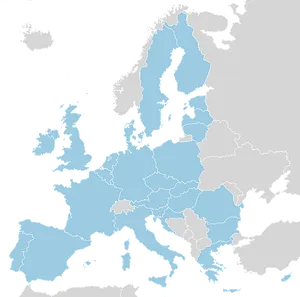 Professor Anne Green (IER) and Dr Ilias Livanos (Cedefop) have an article on Involuntary Non-Standard Employment in Europe published in the April 2017 issue of European Urban and Regional Studies. The journal article outlines how In some countries in Europe the economic crisis starting in 2008 was marked not only by a rise in unemployment, but also by increases in individuals in part-time and temporary working, so emphasising the need to examine employment composition as well as non-employment. The promotion of non-standard forms of employment – such as part-time and temporary working – has been part of Europe’s employment agenda, but directives have also focused on raising the quality of such work.
Using European Union Labour Force Survey data, Anne and Ilias construct an indicator of involuntary non-standard (part-time and temporary) employment (INE) , depicting a negative working condition. Descriptive analyses show important differences between countries in the incidence of INE, which is highest in Spain, Portugal and Poland, and also in the composition of INE. By contrast, INE tends to be lower in countries with Anglo-Saxon and Nordic welfare state models. Econometric analyses reveal that young workers, older workers, women, non-nationals, those with low education and those who were unemployed a year ago are at greatest risk of INE.
Green, A. and Livanos, I. (2017). Involuntary non-standard employment in Europe. European Urban and Regional Studies, 24(2), pp. 175–192. DOI: 10.1177/0969776415622
New project: AHSS Sector analysis of the employment outcomes of graduates
 The British Academy has commissioned IER to undertake an analysis of the employment outcomes of graduates on undergraduate (UG) and taught post-graduate (PGT) courses in the Arts, Humanities and Social Sciences (AHSS) at UK Higher Education Institutions, looking at the sectors in which they are employed, the jobs they do, and the skills that they demonstrate. As part of this research, we are looking for volunteers to participate in two online focus groups. Participants will be offered a £10 incentive for attending the focus group. All participants must be AHSS graduates from UK universities who are currently in paid work.
For more information or to register an interest in taking part, please contact C dot Lyonette at warwick dot ac dot uk
Local Skills Case Study
 The Local Skills Study outlines how to understand the way in which local-national and local-local collaborative working needs to develop if it is to enhance skills development in England. It is based on a case study of the Black Country and seeks to show how local skills devolution can best be realised. The report also identifies how other countries have devolved their skills and employment policy to local or regional levels. Reflecting on the international and local evidence the study develops a framework to be used as a tool for local actors to use their combined local knowledge to answer key questions about the context, drivers for change and desired outcomes to enable them to more effectively deliver local skills and to meet local needs.